
Original article (in Bosnian) was published on 25/8/2025; Author: Nerma Šehović
On social media, a claim has gone viral alleging that the Trnopolje camp was merely an “open refugee center” and that footage of starved detainees behind barbed wire, filmed in the summer of 1992, was staged.
A series of tweets claiming that Trnopolje was not a concentration camp but only a “refugee camp” was published on August 19, 2025, on the X profile Stari Pragista (Стари Прагиста). The first post in the series shared the cover of the American magazine Time, featuring the image of a Trnopolje detainee, accompanied by the following text:
This is the cover of the infamous criminal magazine Time, a symbol of lies and deceptions carried out during the war by the Ustaša-jihadist coalition in cooperation with the scum from the so-called West. A picture through which they constructed the stinking lie about the so-called death camp Trnopolje near Prijedor.
Other tweets claimed that British reporters from ITN television and The Guardian who visited Trnopolje on August 5, 1992, conspired to portray this “refugee camp” as a “death camp” (1, 2, 3, 4, 5, 6). Fikret Alić, the detainee on the Time cover, was accused of lying and of taking part in the alleged conspiracy. As “evidence” that the Trnopolje story was propaganda, they cited the statement of German journalist Thomas Deichmann, who claimed that the barbed wire in the camp was misrepresented, as well as a statement by one detainee who told British journalists through the wire that Trnopolje was a refugee camp and not a concentration camp.
The first tweet from the Stari Pragista profile had been viewed more than 60,000 times and shared nearly 200 times by the date of this analysis.
What are the Facts?
The Crisis Staff of Prijedor, led by the Serbian Democratic Party (SDS), opened three camps for the non-Serb population in the area (Omarska, Keraterm and Trnopolje) after the violent takeover of the municipality in May 1992 (link). These camps were part of a broader campaign of ethnic cleansing in the Prijedor region.
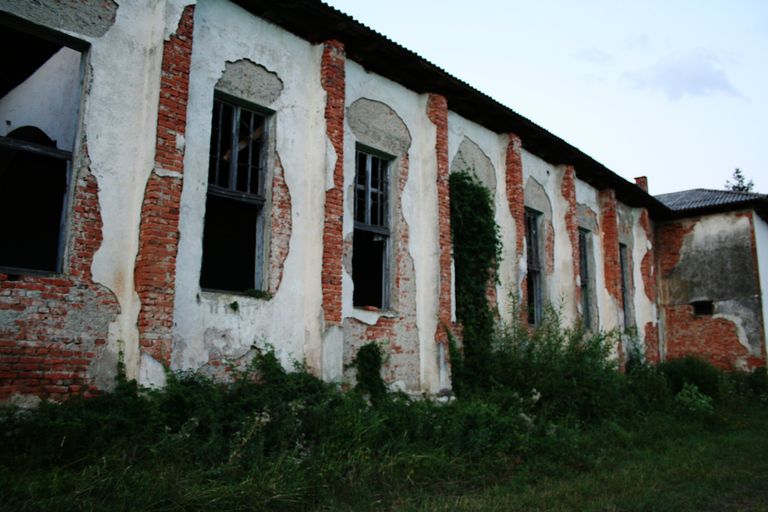
Trnopolje was established on May 24, 1992, in the premises of a former elementary school and accompanying buildings in the village of the same name. Although the then SDS-controlled authorities claimed it was an open reception center for refugees, it was in fact a detention facility. Trnopolje was not formally called a concentration camp, but in reality, that is exactly what it was. Historically, the creators and administrators of concentration and death camps generally did not present the reality or true purpose of camps transparently (1, 2).
A concentration camp is a detention center where members of a particular political, national, ethnic, or racial group are confined for reasons of security, exploitation, or punishment. Unlike prisons, where inmates are convicted of crimes, in concentration camps people are detained based on group identity, without trial or charges.
Trnopolje operated from May to December 1992. Detainees were not free to leave the camp except under special conditions, as it was surrounded on all sides by guards and machine gun nests. Inside, conditions were marked by poor hygiene, lack of food and medical care, and detainees were subjected to physical and sexual violence (link). Dozens, and by some estimates hundreds, of killings took place in Trnopolje (1, 2). However, the primary aim of this, as with other camps around Prijedor, was the displacement and collective traumatization of the non-Serb population, mainly Bosniaks and Croats, from the Prijedor region.
The facts about Trnopolje have been extensively documented, and evidence of crimes committed there was included in the verdicts of the International Criminal Tribunal for the former Yugoslavia (ICTY) and the Court of Bosnia and Herzegovina.
Journalists Penny Marshall and Ed Vulliamy visited Omarska and Trnopolje in August 1992. The footage and photographs they took traveled around the world, offering a glimpse of what was happening in the Prijedor area in the summer of ’92. The existence of the camps was already known, and stories of abuse against detainees had spread from refugees who fled the Prijedor region to Croatia.
The footage by the British crew can be viewed here and here (archived here and here). What the recordings show is that their access to the “centers”, as administrators described them, was restricted. In Omarska, Marshall and Vulliamy visited a canteen where visibly malnourished detainees were eating, surrounded by armed guards. Despite their insistence, they were not allowed to enter the hangar where detainees were held.
In the footage, Vulliamy states that Radovan Karadžić had promised journalists full transparency, while a spokeswoman for the Serb authorities claimed he had promised them something different and that they could only be allowed to see certain things. After that, guards escorted them out of Omarska.
In Trnopolje, men were filmed standing behind barbed wire in the August heat. Although Stari Pragista focused on Fikret Alić in its X posts, insinuating that his emaciation was an anomaly and that others looked normal, the footage clearly shows dozens of visibly malnourished men. Some had been transferred there from Keraterm. The report also showed conversations with several detainees who spoke English. They were asked direct questions about how they were treated in Trnopolje and Keraterm. Most refused to answer, with some even saying they did not know whether they were allowed to talk about such things.
Idriz Merdžanić was also interviewed. A doctor who provided medical help to other detainees. Clearly frightened and reluctant to speak on camera, he subtly nodded when asked whether detainees who had been beaten in another camp (Keraterm) had arrived there.
The report noted that some detainees wanted to talk when the cameras were off, telling the journalists they had survived atrocities and that some had been killed. From Trnopolje, journalists also smuggled out film containing photographs of beaten detainees. These photos had been secretly taken, as was revealed years later during proceedings before the Hague Tribunal, by Idriz Merdžanić and another doctor in an attempt to document the crimes committed in Trnopolje.
Contrary to the claims on X, the ITN report did not state that Trnopolje was a “death camp”. The footage showed detainees and their stories and raised the question of whether these camps were really just reception centers or something far worse. The report also noted that one part of Trnopolje housed refugees who had come there voluntarily because they had nowhere else to go, but it was obvious that men had also been brought there forcibly.
After the report was broadcast, the SDS authorities, under public pressure, allowed the International Committee of the Red Cross to visit the camps around Prijedor, including Trnopolje. The United Nations also investigated crimes in the Prijedor camps from October ’92. Trnopolje was officially closed in September ’92, although some detainees remained there until December.
Stari Pragista in its posts referred to claims by German journalist Thomas Deichmann, who in a 1997 article in the magazine Living Marxism alleged that Marshall and Vulliamy had “staged” the Trnopolje footage, that the camp was not surrounded by barbed wire, that detainees were free to walk around, and that the news crew had actually been surrounded by barbed wire in a facility next to the camp. He also claimed that Trnopolje was not a concentration camp but a refugee camp.
These claims are debunked by the footage recorded by the journalists inside the camp. In close-up shots, it is clear that barbed wire surrounds part of the camp where some detainees were held. Armed guards are also visible.
Marshall and Vulliamy sued Deichmann for defamation and won the case in court.
The International Criminal Tribunal for the former Yugoslavia, based on extensive evidence and testimonies, issued final convictions for crimes committed in Trnopolje against Milomir Stakić (President of the Prijedor Crisis Staff), Radoslav Brđanin (President of the Crisis Staff of the Autonomous Region of Krajina), taxi driver and reserve police officer Zoran Žigić, and guard Duško Tadić.
Thus, Trnopolje was a camp for the non-Serb population of Prijedor, targeted in the campaign of ethnic cleansing carried out by SDS-controlled local authorities. Claims that it was merely a refugee center opened for humanitarian purposes, and that journalists fabricated their report about this concentration camp, represent a classic example of revisionism and denial of the war crimes of the 1990s.According to the abovementioned facts, the claim that the Trnopolje camp was a refugee center misrepresented as a “death camp” for propaganda purposes is rated as a conspiracy theory.