
Original article (in Bosnian) was published on 19/9/2025; Author: Mladen Lakić
False claims that mammography has been banned in Switzerland because the procedure is risky and unnecessary are once again circulating on social media. None of this is true, but such fake news can discourage women from undergoing a preventive examination that can save their lives.
In July, August, and September 2025, Facebook posts circulated claiming that mammography, an X-ray image of the breasts used for early detection of breast cancer, had been banned in Switzerland because it was risky for health. One such post, published on July 20, 2025, stated the following:
VALUABLE NEWS:
SWITZERLAND BECOMES THE FIRST COUNTRY TO BAN MAMMOGRAPHY! GLOBAL MEDICAL SCANDAL EXPOSED!
News of the day: Switzerland becomes the first country to BAN mammography, revealing the shocking truth behind the biggest fraud in the medical industry. Find out how mammograms harm women, with up to 60% false positives, cancer risks, and a profit-driven system exploiting millions. It’s time for safer, non-invasive alternatives!
The claim that Switzerland is becoming the first country to ban mammography was also shared on another Facebook profile on July 22, 2025. In some posts from August and September, additional allegations about the “dangers” of this diagnostic method were highlighted (1, 2, 3, 4, 5, 6, 7). For example, a post from August 3, 2025, claimed that mammograms can “spread tumors” and that this method produces up to 60% false-positive results.
FRAUD EXPOSED:
Up to 60% false positives. That means half of the women diagnosed with breast cancer never actually had it. They were pumped with chemotherapy, cut, or irradiated… for nothing.
The procedure is violent. Breasts are crushed under intense pressure and exposed to radiation, a known carcinogen. It’s “preventive,” yet it causes what it claims to prevent.
One post even claimed that doctors deliberately expose women to the “dangers” of mammograms.
It gets worse: mammograms can spread tumors. New studies confirm that compression of sensitive tissue can cause metastasis. The test itself can be the disease.
690.000 cases of overdiagnosis. Not by accident, by design. Hundreds of thousands of women turned into cash cows for Big Pharma while they were perfectly healthy.
The claim that Switzerland banned mammography was also published in an article on the website Provjeri on November 25, 2024, and in an article on Magicus on February 25, 2025.
What Are the Facts?
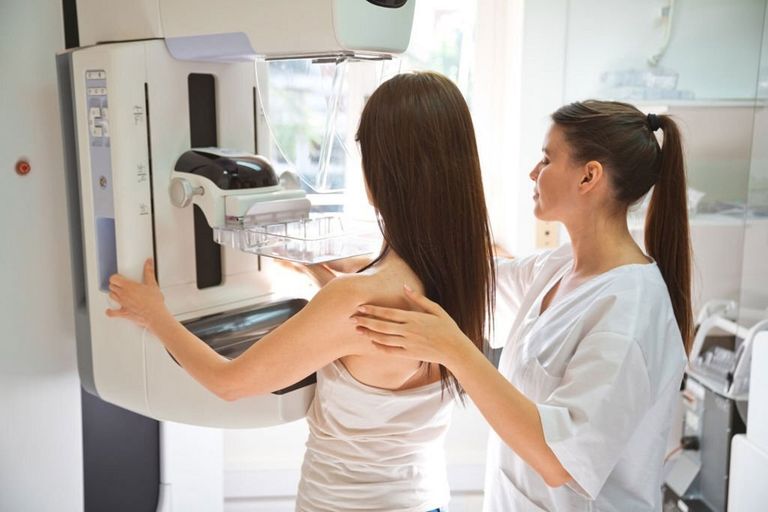
Mammography is an X-ray of the breasts used to detect changes in breast tissue and to further investigate certain symptoms or findings identified in other examinations. During the procedure, the breasts are compressed between two plates in an X-ray machine, which can make the process uncomfortable or painful, though it is brief. Thanks to this method, breast cancer can be detected even before symptoms appear, and mammography is considered the gold standard for detecting the disease.
Switzerland has not banned mammography. The false claim that it has circulated in previous years as well, as noted in our 2023 analysis. In 2014, the Swiss Medical Board, an organization that independently evaluated diagnostic procedures and therapeutic interventions, issued a controversial recommendation to suspend the state-run mammography screening program. This organization argued that the screenings led to too many unnecessary interventions and additional tests and treatments. These recommendations were widely criticized by the scientific community.
Our partner fact-checking portals Faktograf in Croatia and Raskrinkavanje in Montenegro also wrote in 2024 about the false claim that mammography is banned in Switzerland. Faktograf reported that Stefanie de Borba, spokesperson for the Swiss Cancer League, stated in an email to the outlet that the claim about a ban was false:
These rumors are completely false. In Switzerland, mammography is currently the main method for early detection of breast cancer. It is practiced in all Swiss cantons. As part of organized screening programs, all women aged 50 and above are systematically invited to mammography every two years. In cantons without a screening program, mammography is performed in consultation with a doctor. Scientific research shows that when conducted within a quality-controlled program, mammographic screening can reduce mortality from breast cancer. The Swiss Cancer League recommends and supports mammography screening programs. We believe that the benefits currently outweigh the harms.
The same false claims were also assessed by AFP Fact Check in its 2024 analysis. The claims circulated in English-speaking regions as well and were analyzed by several international fact-checking platforms (1, 2, 3).
Fabricated Claims About the Harms of Mammography
Some of the analyzed posts claim that mammography produces up to 60% false-positive results, implying that half of all women diagnosed with breast cancer never had this disease.
Mammography does not diagnose breast cancer. It is a procedure that shows whether there are changes that might be malignant or develop in that direction. Abnormal results on a mammogram do not necessarily mean that a person has cancer.
Mammographic screenings have their limitations. Abnormal results can, in some cases, lead to further analysis and testing even when a woman does not have cancer, resulting in “false-positive results”. This does not mean that breast cancer has been diagnosed. Rather, based on such findings, the patient is referred for further tests and diagnostic procedures.
One of the limitations is so-called overdiagnosis, which refers to detecting, and subsequently treating a cancer that would never have been life threatening. In our aforementioned 2023 analysis, we requested a comment from radiologist Dr. Una Delić, who emphasized the importance of mammographic screening in breast cancer prevention:
Mammography is the most sensitive method for detecting early and non-palpable breast cancer. Early-stage breast cancer often appears as tiny millimetric calcifications visible only on a mammogram. In all developed countries, screening programs, that is, preventive examinations for healthy women include an annual mammographic check-up.
All of this is scientifically proven and published in international guidelines, it is not determined by an individual doctor. These are protocols followed in most developed countries.
Dr. Delić also clarified that it is not true that the pressure applied to the breasts during mammography causes tumor spread. She explained that regular mammographic screening is the foundation of the fight against breast cancer, that it does not carry a risk of causing cancer, and that the compression during the procedure cannot accelerate tumor growth or contribute to metastasis.
Claims that women are subjected to mammography for profit, despite the alleged dangers (“turned into cash cows”, as some posts describe), are part of a conspiracy theory about the so-called Big Pharma. According to this conspiracy theory, corporations, regulatory agencies, and doctors are part of a global network whose goal is to keep people sick to increase profits from drug sales. There is no evidence to support such claims.
Based on the facts presented, the claims that Switzerland has banned or is banning mammography are rated as spreading fake news. The same rating applies to the claim that mammograms are dangerous because they can cause or spread cancer. The claim that mammography produces up to 60% false-positive results is rated as disinformation. The claim that women are deliberately subjected to risky mammography for profit is rated as conspiracy theory.