
Original article (in Serbian) was published on 22/10/2025; Author: Teodora Koledin
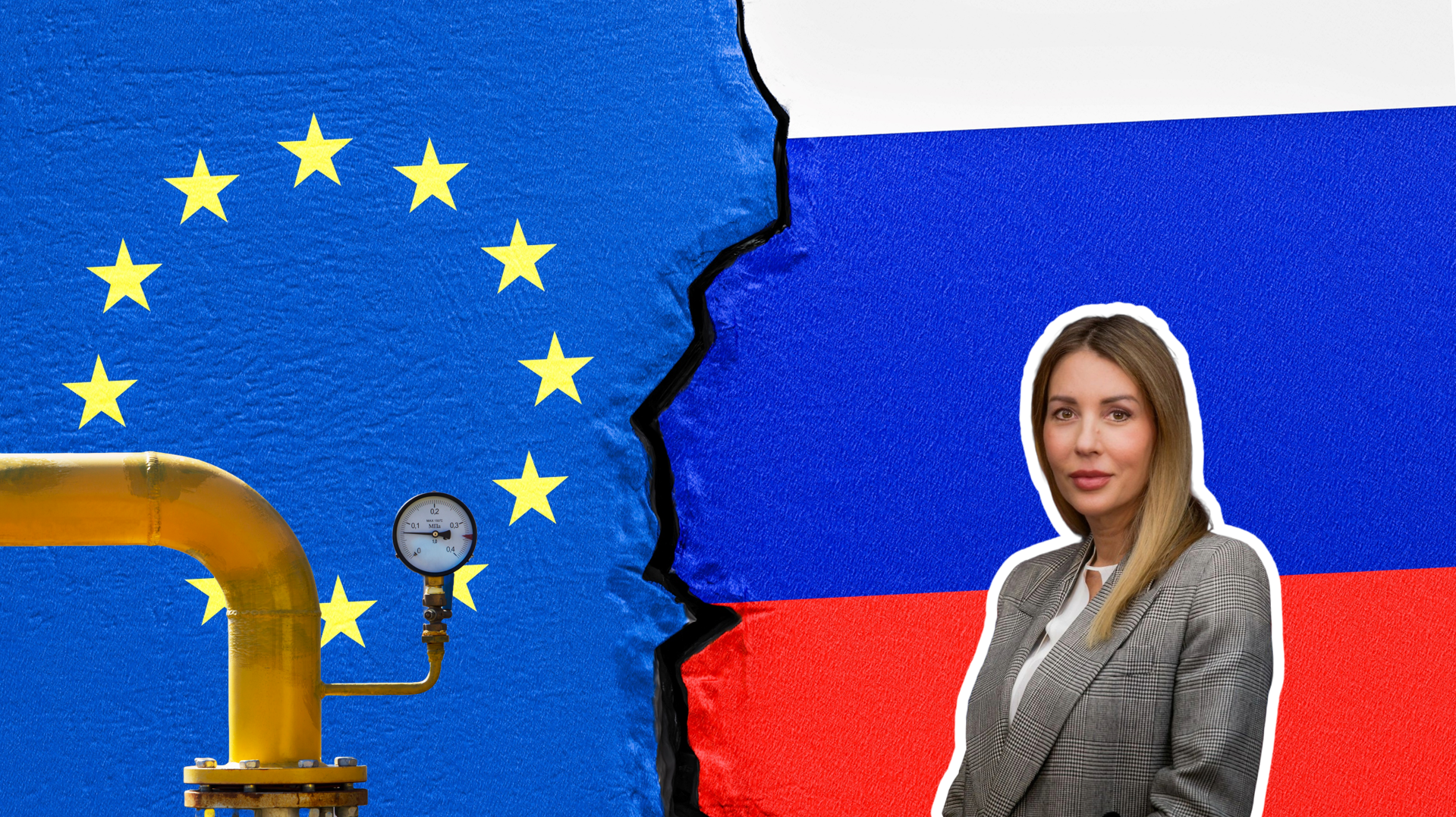
A large number of media outlets have reported that the Council of the European Union adopted a ban on the transit of Russian gas through EU territory to third countries – a claim also echoed by Serbia’s Minister of Mining and Energy, Dubravka Đedović Handanović, who described the situation as “very difficult and almost hopeless.” However, an EU Council official, in a response to Tragač, clarified that the “phased reduction and ban outlined in the Council’s position do not apply to transit procedures.”
We first carefully reviewed the text of the Proposal for a Regulation of the European Parliament and of the Council on the gradual phase-out of Russian gas imports, but found no evidence to support the claim made in the media. Specifically, in May 2022, the European Commission launched the REpowerEU plan to “completely diversify away from Russian energy imports in a secure, affordable, and sustainable way.” Later, on May 6 of this year, the Commission announced the Plan for the Complete Phase-Out of Russian Energy Imports.
The proposed regulation stipulates that, starting January 1, 2026, the import of Russian gas will be prohibited under new contracts concluded after June 17, 2025, while short-term existing contracts may continue until June 17, 2026. At the same time, by the end of 2027, “a complete cessation of imports under existing contracts” is planned, with a gradual phase-out of remaining gas quantities. Naturally, these provisions apply to EU member states, which are required to develop national diversification plans.
In a statement issued lately, the Council of the European Union noted that “additional monitoring and reporting mechanisms have also been introduced to prevent the entry of Russian gas into the EU through transit procedures (i.e., gas that passes through the EU on its way to another destination without entering the EU market).”
We asked whether this plan indeed includes a “ban on the transit of Russian gas,” as claimed by Minister Đedović Handanović, and soon received a response from an EU Council official:
“The phased reduction and ban outlined in the Council’s position do not apply to transit procedures (that is, gas originating in a third country and passing through EU territory to another third country without entering the EU market). There are only additional monitoring and reporting mechanisms to prevent possible leakage of Russian gas within such transit procedures.”
In short, Russian gas can still pass through EU territory on its way to a third country (under increased supervision), but it must not enter the EU market along the way. In addition, European Commissioner Marta Kos stated in the European Parliament that the decision to ban the import of Russian gas into EU countries as of January 1 next year “does not imply that member states will halt transfers to third countries such as Serbia.”
The misinformation was shared by numerous Serbian media outlets, including Alo, B92, Novosti, Kurir, Informer, RTS, Direktno, Vojvodina uživo, RTV, Dnevnik, K1, Glas zapadne Srbije, Vreme, 24sedam, Pink, NS uživo, Republika, and Sputnik.