
Original article (in Slovenian) was published on 18/11/2025; Author: Antun Katalenić
Serbian President Aleksandar Vučić expressed his condolences to the families of the victims and their relatives on the day of the tragedy in Novi Sad, on 1 November last year.
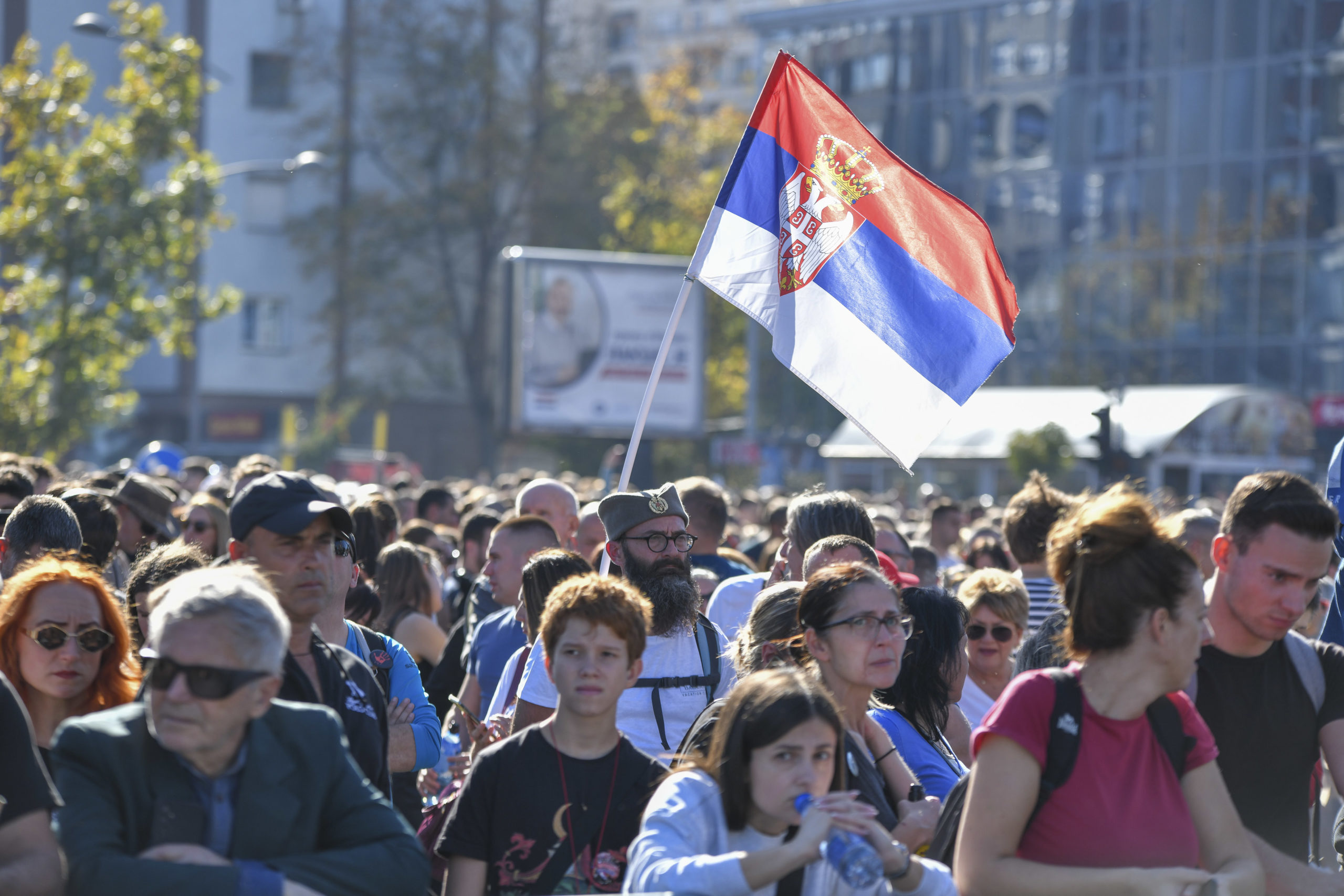
Saša Banjanac Lubej, the Balkan correspondent for public broadcaster RTV Slovenija, reported on 1 November on the first anniversary of the collapse of the Novi Sad railway station canopy. The incident, which claimed 16 lives, triggered a wave of protests against the Serbian authorities.
During her reporting for the radio programme Dogodki in Odmevi on Radio Slovenija’s first channel, Banjanac Lubej endorsed the presenter’s statement that Serbian President Aleksandar Vučić had “for the first time expressed condolences to the families of the deceased” the day before, on 31 October.
In fact, Vučić had already expressed condolences to the victims’ families and their relatives on behalf of all Serbian citizens on the day of the accident, on 1 November last year. He also conveyed condolences to the bereaved in a media statement on 1 May this year, six months after the tragedy in Novi Sad.
On the anniversary of the accident in Novi Sad, the president apologised to demonstrators and students who had taken part in protests lasting more than a year and whom he had repeatedly disparaged, the correspondent added in her piece for Dogodki in Odmevi.
Milica Blagojević, a journalist with KRIK, Serbia’s network for investigating crime and corruption, told Razkrinkavanje.si that Vučić, his supporters and pro-government media had labelled the students, who occupied universities in protest and occasionally blocked roads, as “blockaders” and “terrorists”. After violent incidents that, according to the Serbian journalist, were in fact directed against the students, the authorities branded them “thugs, thereby completely distorting the events”.
The Serbian president further claimed that the protests were an attempt at a “colour revolution”. As Blagojević explained, this is a propaganda tactic portraying mass protests and public dissatisfaction with state authorities as a foreign-funded attack on the state.
In her view, the president’s latest apology was therefore not sincere. She noted that it was likely intended merely as a signal to a European audience. “It is crucial to underline that incidents and attacks soon followed Vučić’s apology, targeting citizens who had gathered around the parliament in Belgrade,” Blagojević said. “Journalists and students were attacked, while the police looked on calmly and turned a blind eye,” she added.
The protesters’ demands, including early elections, remain unmet, she concluded.
In response to our findings, Banjanac Lubej explained that she had not come across any information while working on the report that would indicate Vučić had expressed condolences before 31 October this year. “Clearly I did not check this information carefully enough under time pressure. I prepared the draft questions for the presenter myself, so the mistake is my responsibility,” she added.
We classify Banjanac Lubej’s claim that Vučić expressed condolences to the victims’ families only after a year as a reckless mistake, as the author of the report acknowledged that she had made a mistake.