
Original article (in Serbian) was published on 4/11/2025; Author: Teodora Koledin
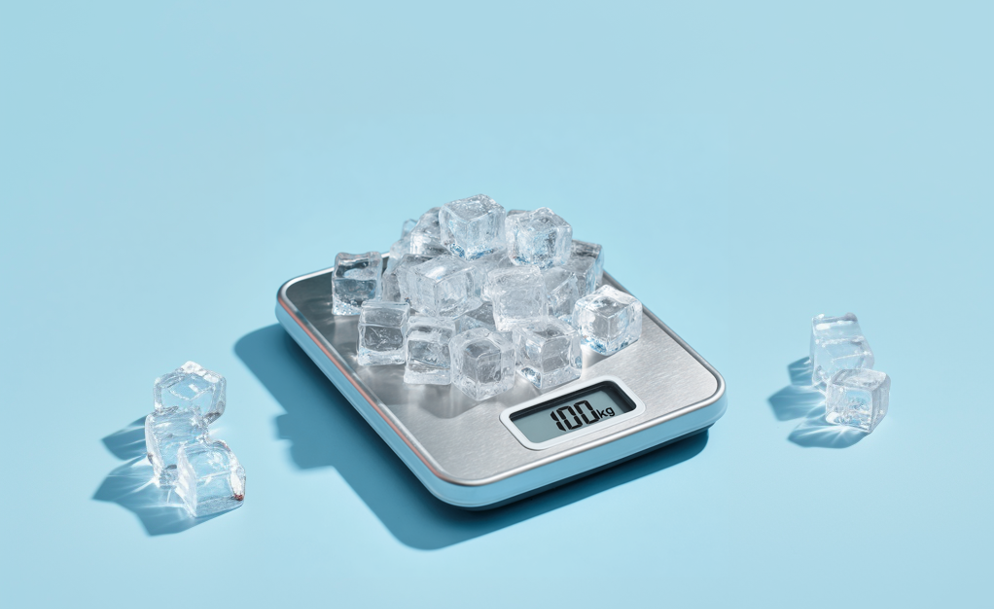
The tabloid Informer published a story with the unusual claim that “ice makes you gain weight.” Describing ice as a “silent saboteur of diets,” the author supports this assertion with arguments derived from traditional Eastern medicine. However, when asked by Tragač whether consuming ice could lead to weight gain, Stanford University medical professor Dr. Christopher Gardner gave a clear answer – no.
The Informer article states that “when we consume too many cold drinks or food directly from the refrigerator, the body has to spend extra energy to warm it up to internal temperature.” According to the journalist, this process depletes Qi (the so-called flow of life force), slows down circulation, and – as ancient healers claim – freezes internal flows of energy and blood. “When Qi is blocked, energy and water, instead of circulating freely, begin to accumulate in the body. This can lead to swelling, water retention, a feeling of dampness in the body, and digestive problems,” Informer concludes.
Similar disinformation – claiming that drinking cold water increases belly fat – has already circulated on social media abroad, but it was debunked by the French fact-checking outlet AFP Fact Check. Several other websites described the same assertions as “myths” (1, 2), meaning claims with no basis in reliable scientific data.
Experts: Informer’s theses about ice don’t hold up
In a response to Tragač, Professor Christopher Gardner – who is also director of the Nutrition Studies Center at Stanford – said he would be “astonished” if anyone had ever tested this hypothesis.
“If the caloric content of the drinks consumed is the same, with or without ice, I have no reason to believe the impact on weight could be different,” the professor said, noting that the only “qualification” to this statement could be the dosage, or quantity. But even in that case, if you drink somewhat more (cold) liquid than usual, the effect described by Informer should not occur.
We also consulted Dr. Ivana Šarac, a research associate at the Institute for Medical Research, University of Belgrade, whose field of interest is nutrition and metabolism. In her response, Dr. Šarac stated that “ice and cold drinks cannot make you gain weight” and that the claims in Informer are “completely inaccurate and without any scientific basis.” Dr. Šarac added that there are even opposing opinions suggesting that consuming cold drinks and food can speed up metabolism by stimulating thermogenesis, and thereby glucose and fat consumption in the body:
“According to some claims, drinking 250 ml of cold water can burn 7 additional calories to heat it up to the body temperature of 37 degrees Celsius. However, this effect is negligible in terms of weight reduction. To lose weight, at least a 300–500 calorie deficit is needed. There is evidence that exposure to cold for a certain period can speed up metabolism (through activation of the adrenergic nervous system and stimulation of the ‘browning’ of fat tissue, meaning the development of brown fat cells responsible for thermogenesis, warming the body, and burning calories), but all of these studies were conducted on animals, while studies on weight-loss effects in humans are lacking.”
As for research testing the effects of ice or cold liquids on the human body, there isn’t much. A 2008 study showed that consuming cold fluids before and during exercise can reduce the rise in internal temperature and extend cycling time. Another study examined the effects of beverage temperature on body weight and composition, but the experiment was conducted on rats. Based on its results, researchers concluded that “consuming cold water increases muscle mass gain and reduces body fat gain due to increased energy expenditure.” However, it should be noted that this does not necessarily mean the effects would be the same in humans.
Informer’s article was also republished on the portal Atvbl.