
Original article (in Albanian) was published on 08/07/2025; Author: Patris Pustina
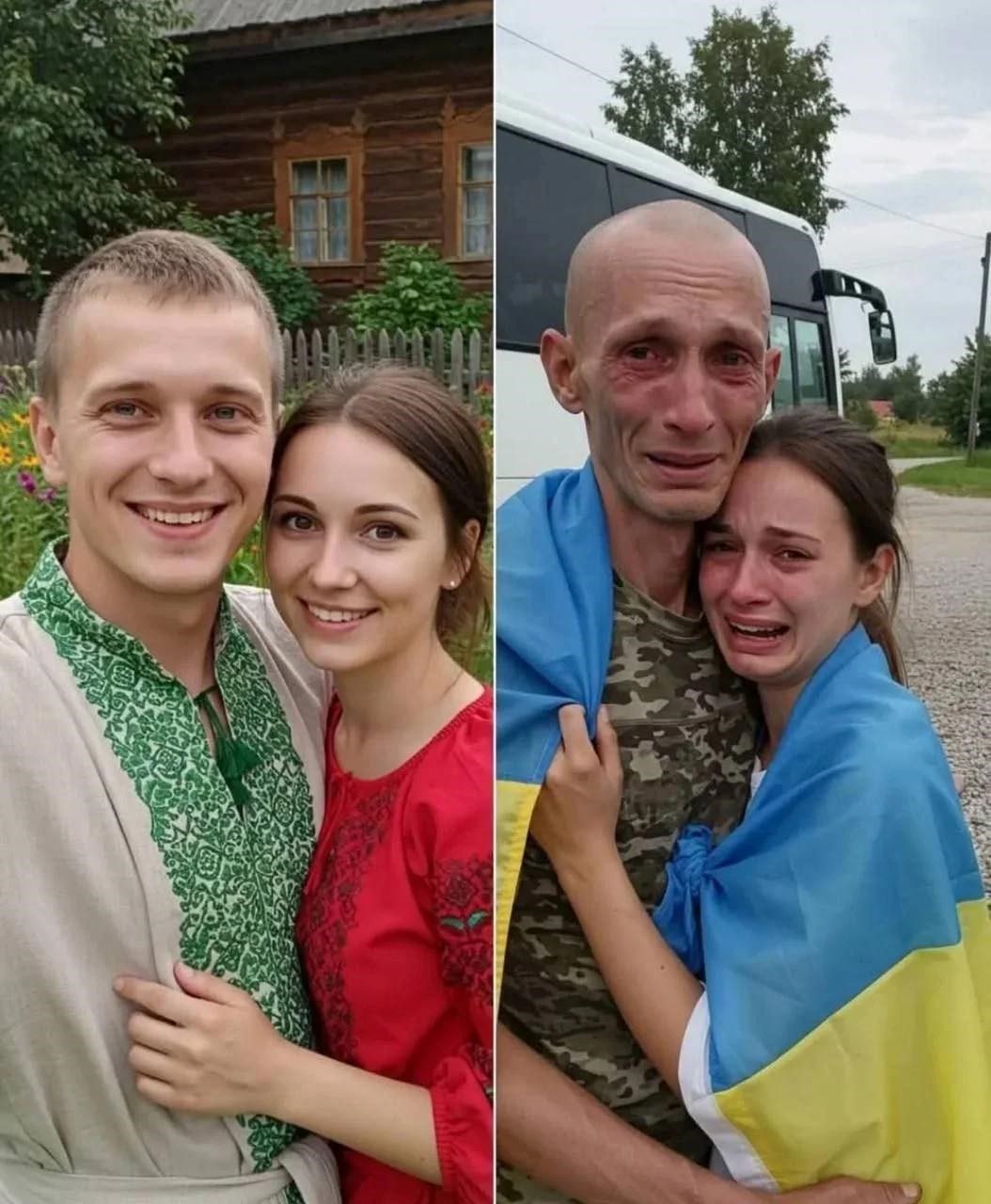
An image is circulating on social media, including Albanian-speaking platforms, which is claimed to show a Ukrainian soldier before and after returning home from 400 days at war.
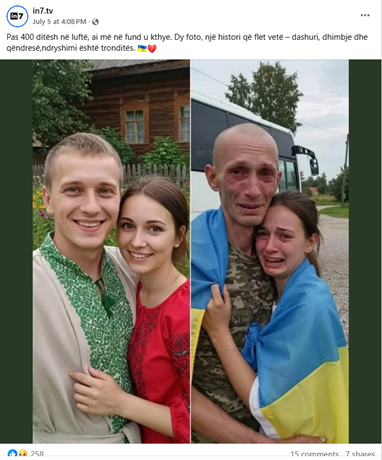
However, the individuals shown in the image are not real. The image has been generated using artificial intelligence (AI) software.
This becomes particularly evident in the change in the ‘soldier’s’ height. In the first image, he appears shorter than the ‘woman’ next to him. In the second image, the height difference between them is noticeably greater, as illustrated below.
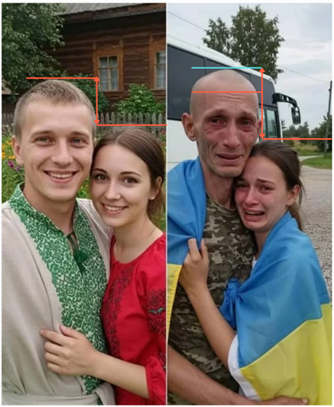
The man in the left image is shorter than the man in the right image.
The image above is among several AI-generated ones circulating online, claiming to show Ukrainian soldiers returning from war. These photos come with sad stories but lack names, backgrounds, or coherence beyond the oddly smooth images and heart-breaking accounts.
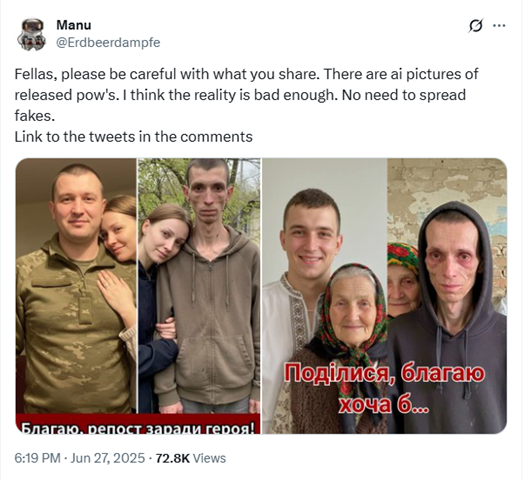
Similar AI-generated images
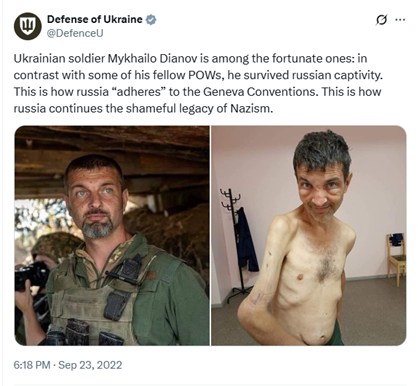
It is important to compare these with real before-and-after photos of soldiers, which may have inspired the creators of these AI-generated images.
Mykhailo Dianov, a musician who served in the Azov regiment, was one of 215 prisoners of war released in a sudden prisoner exchange between Ukraine and Russia in September 2022. Photos of Dianov, shared by the Ukrainian army, show him weakened, bruised, and bearing the marks of his time in a Russian prison.
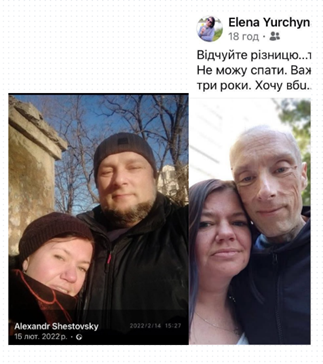
Oleksandr Strafun, who was fighting in Mariupol, made his last contact with family on March 1, 2022. On June 14, 2025, Strafun came home during a prisoner of war exchange. The image below shows a comparison between a photo of him one month before captivity and a photo after his release from prison.
These images are examples of what is called ‘AI slop.’
AI slop describes low-quality images, videos, or texts produced using generative artificial intelligence technology, marked by a noticeable lack of effort, logic, or meaning.
On Facebook, AI slop is often intended to attract as many comments as possible and usually involves images and accompanying stories that trigger strong emotions in people. AI slop that appeals to pity, sympathy, and well-wishes in the accompanying text tends to generate a lot of engagement.
To avoid misinterpretation of such content, it is important that every video, photo, or other material generated or manipulated with artificial intelligence is clearly labeled as such. This helps inform the audience and protects them from disinformation. Facebook requires users to tag AI-generated images and videos accordingly.