
Original article (in Serbian) was published on 2/10/2025; Author: Teodora Koledin
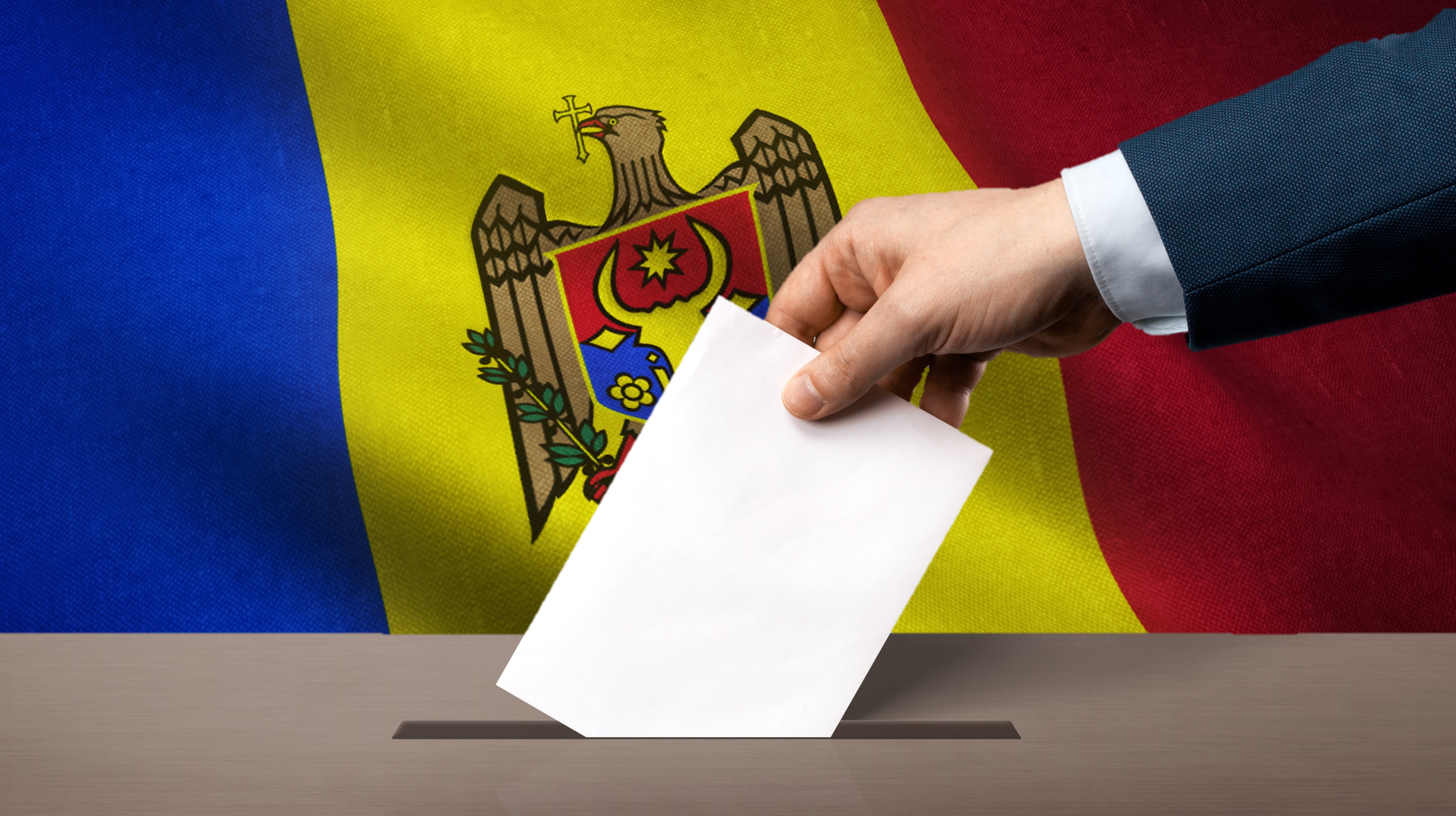
A few days ago, parliamentary elections were held in Moldova, where the pro-European Party of Action and Solidarity (PAS) of the current president, Maja Sandu, won with 50.2% of the votes. The Serbian tabloid Informer, in its print edition of September 30, reported that Moldova is facing a “brutal division” in society because the “pro-Russian opposition” allegedly won 49.8% of the votes. However, the election results cannot be interpreted this way. Informer added up all the votes that did not go to the pro-European PAS and labeled them as votes for the pro-Russian opposition, even though several parties that the tabloid grouped under the “pro-Russian opposition” banner actually support EU integration in their political programs.
The political option that received the second-highest number of votes (24.2%) in the Moldovan elections was the Patriotic Bloc, which – among other things – advocates for “restoring mutually beneficial relations and strengthening the strategic partnership with the Russian Federation.” Therefore, it can unequivocally be described as pro-Russian. However, this is not the case with the other three parties that entered parliament.
The political bloc Alternative, which came in third with 7.96% of the votes, declares in its program that it supports European integration. “We believe that European integration is the most important constructive challenge for Moldova – the path toward sustainable development and national unity,” the bloc states on its website. Our Party, which came in fourth with 6.20% of the votes, describes itself as pro-Moldovan, which for them means that they “cannot be anti-European, anti-Russian, anti-Romanian, anti-American, or anti-Chinese politicians.” The Democracy at Home Party (PPDA), which came in fifth with 5.62%, states in its program that it “advocates for the integration of the Republic of Moldova into the European Union.” However, all three of these parties have previously been accused of maintaining ties with Russia (1, 2, 3).
Erizanu: Moldovans have shown they want to join the EU
To clarify whether Informer’s claims can be considered true, we spoke with Moldovan journalist Paula Erizanu, who writes about Eastern European affairs for the BBC, The Guardian, and the Financial Times. She explained that while it is true that some parties have hidden pro-Russian tendencies, their electoral strategies actually show that Moldovan voters are more oriented toward Europe than toward Russia.
“The fact that Alternative pretends to be pro-European shows that Moldovans have become much more pro-European than they used to be,” Erizanu explained. She added that several opposition lists — such as those of Olesea Stamate (0.33%), PL (0.10%), Împreună (0.32%), ALDE (0.23%), MRM (0.64%), and LOC (0.39%) — are genuinely pro-European. Speaking about the Democracy at Home party (PPDA), Erizanu noted that this party also presents itself as pro-European but that there are “serious question marks” regarding its connections, actions, and statements. Ultimately, Erizanu concluded that the very fact that certain parties must pretend to support EU accession “shows what Moldovans want that” and that “not all voters of these parties could have known which side those parties were actually on.”
Therefore, Informer’s calculation is certainly incorrect. Even if we were to combine the votes of the nominally pro-European parties that entered parliament with those of the Patriotic Bloc and label them all as the “pro-Russian opposition,” the total would still not reach 49.8% as the Serbian tabloid claimed, but rather around 44%. The assessment that Moldova is facing a “brutal division” in society after the elections is even less accurate. If elections are taken as a measure of social divisions, as Informer suggests, the results in Moldova show that citizens voted significantly more for pro-European political parties. For this reason, some of the “Russian players” had to put on “European clothes” for the elections.