
Original article (in Bosnian) was published on 1/11/2025; Author: Amar Karađuz
A “tweet” by a Sarajevo-based lawyer, in which he incorrectly claims that, under the Dayton Agreement, the UN Security Council appoints High Representatives, was republished by media outlets close to the SNSD.
Commenting on the support expressed by the Embassy of the Federal Republic of Germany in Bosnia and Herzegovina for High Representative Christian Schmidt, Sarajevo lawyer Damir Sakić stated on the social network X on 7 November 2025 that Annex 10 of the Dayton Peace Agreement provides that the High Representative in Bosnia and Herzegovina is appointed or dismissed by the United Nations Security Council.
First, Annex 10 of the GFAP does not state that the Federal Republic of Germany appoints or dismisses the High Representative, but rather that this is done by the UN Security Council. Second, for the implementation of the 5+2 Agenda, it is still necessary to resolve the issues of state and military property, and for the PIC (which is not mentioned anywhere in the GFAP) to adopt a political decision.
On the same day, the public broadcaster RTRS published an article about Damir Sakić’s tweet:
Sakić: The High Representative Is Appointed by the Security Council, Not Germany (VIDEO)
Annex 10 does not state that Germany appoints or dismisses the High Representative, but rather the UN Security Council, lawyer Damir Sakić emphasized while commenting on the German Embassy’s statement that it stands behind Christian Schmidt.
The article also includes a video statement given by Sakić to RTRS, in which he said that Schmidt “does not have a resolution” of the Security Council and therefore was not appointed in accordance with Annex 10 of the General Framework Agreement for Peace in Bosnia and Herzegovina.
In addition to RTRS, statements by Damir Sakić were reported by Alternativna TV, Argumenti, Faktor magazin and Top portal.
What are the Facts?
Claims that the Dayton Peace Agreement defined a procedure for appointing the High Representative and that the legitimacy of the appointment requires approval by the United Nations Security Council originate from the political discourse of the ruling SNSD in Republika Srpska, which disputes the appointment of Christian Schmidt to this position.
These claims were addressed by our partner portal Istinomjer (1, 2). In analyses published in July 2021 and August 2025, they explained why there is no officially prescribed procedure for appointing the High Representative. Annex 10 of the General Framework Agreement for Peace in Bosnia and Herzegovina (commonly referred to as the Dayton Peace Agreement) does not explicitly state how the High Representative is chosen, nor that the appointment must be confirmed by the Security Council. It states that the High Representative shall be appointed in accordance with relevant resolutions of the United Nations Security Council, without specifying an obligation of confirmation.
Because of the complexities they face, the Parties request the designation of a High Representative, who will be appointed in accordance with relevant United Nations Security Council resolutions, in order to facilitate the Parties’ own efforts and to mobilize and, as appropriate, coordinate the activities of organizations and agencies involved in the civilian aspects of the peace settlement by carrying out the tasks entrusted to him or her by a United Nations Security Council resolution, as described below.
In clarifying the procedure for appointing the High Representative, the Office of the High Representative (OHR) stated as early as 2023 on its website that the UN Security Council does not appoint the High Representative:
Based on the text of Annex 10, it is clear that the appointment of High Representatives (unlike the appointment of military forces – IFOR, now EUFOR-ALTHEA, under Annex 1A) is not carried out by the UN Security Council, although it must be in accordance with relevant resolutions. The practice of the Peace Implementation Council (PIC) clearly shows that the High Representative is appointed by the Steering Board of the Peace Implementation Council, and that this practice is “in accordance with UN Security Council resolutions”, beginning with the adoption of Resolution 1031 (1995) of 15 December 1995.
What Is the UN Security Council?
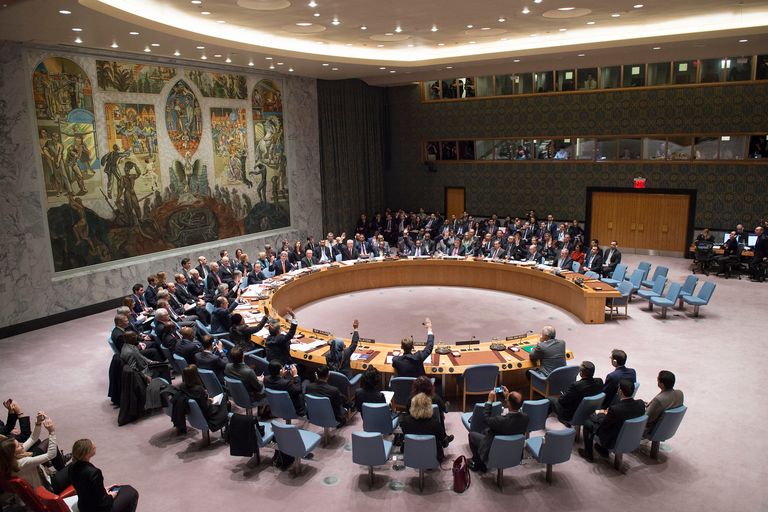
The United Nations Security Council (UNSC)is the main UN body responsible for maintaining international peace and security. It has 15 members, five of which are permanent (the United States, Russia, China, France, and the United Kingdom), and ten non-permanent members elected for two-year terms. It can adopt binding decisions, including the imposition of sanctions and authorization of military interventions.
As emphasized in the OHR statement, practice has shown that High Representatives are appointed by the Steering Board of the Peace Implementation Council (PIC SB). In July 2023, United Nations Secretary-General António Guterres also confirmed, in a response to a letter from BiH Presidency member Željka Cvijanović, that the UN has no role in the selection of the High Representative and that this competence lies exclusively with the Peace Implementation Council.
Therefore, the claim that Annex 10 of the General Framework Agreement for Peace in Bosnia and Herzegovina stipulates that the appointment or dismissal of the High Representative is carried out by the UN Security Council is not accurate.
The Appointment of Schmidt
Ambassadors of the PIC member states appointed Christian Schmidt as High Representative in Bosnia and Herzegovina on 27 May 2021. Schmidt, like the previous High Representative Christian Schwarz-Schilling, who was appointed in 2005, did not receive confirmation from the UN Security Council at the time of his appointment.
In its clarification, the OHR emphasized that an expression of support by the Security Council is not legally necessary for the decision of the PIC Steering Board on the appointment of the High Representative to take effect. It was also emphasized that all previous High Representatives who did receive approval from the Security Council, with the exception of Carl Bildt, had already been in office at the time the Council issued its statement.
An expression of support by the UN Security Council is not legally necessary for the decision of the PIC Steering Board on the appointment of a new High Representative to take effect. All High Representatives whom the UN Security Council welcomed and accepted, with the exception of Mr. Carl Bildt, had already assumed office at the time the Security Council issued its statement. Although the UN Security Council did not explicitly express its consent, this did not affect the exercise of the duties entrusted to High Representative Dr. Schwarz-Schilling. Expressions of support in resolutions are not mandatory.
Carl Bildt, the first High Representative in Bosnia and Herzegovina, was appointed to the position in 1995 by the conclusion of the 18th Peace Implementation Conference in 1995, after which the UN Security Council also agreed with this conclusion in Article 26 of Resolution 1031.
Therefore, the claim that Christian Schmidt was not appointed in accordance with Annex 10 of the Dayton Peace Agreement due to the absence of UN Security Council confirmation is unfounded.
Accordingly, we assess the earliest publication of the claim that Annex 10 of the Dayton Peace Agreement states that the appointment or dismissal of the High Representative in Bosnia and Herzegovina is carried out by the UN Security Council as fake news. The same assessment applies to the earliest publication of the claim that the appointment of High Representative Christian Schmidt is not in accordance with that annex because there is “no Security Council resolution” for it.All subsequent publications of these claims are rated as spreading fake news.