Original article (in Croatian) was published on 31/12/2025; Author: Ladislav Tomičić
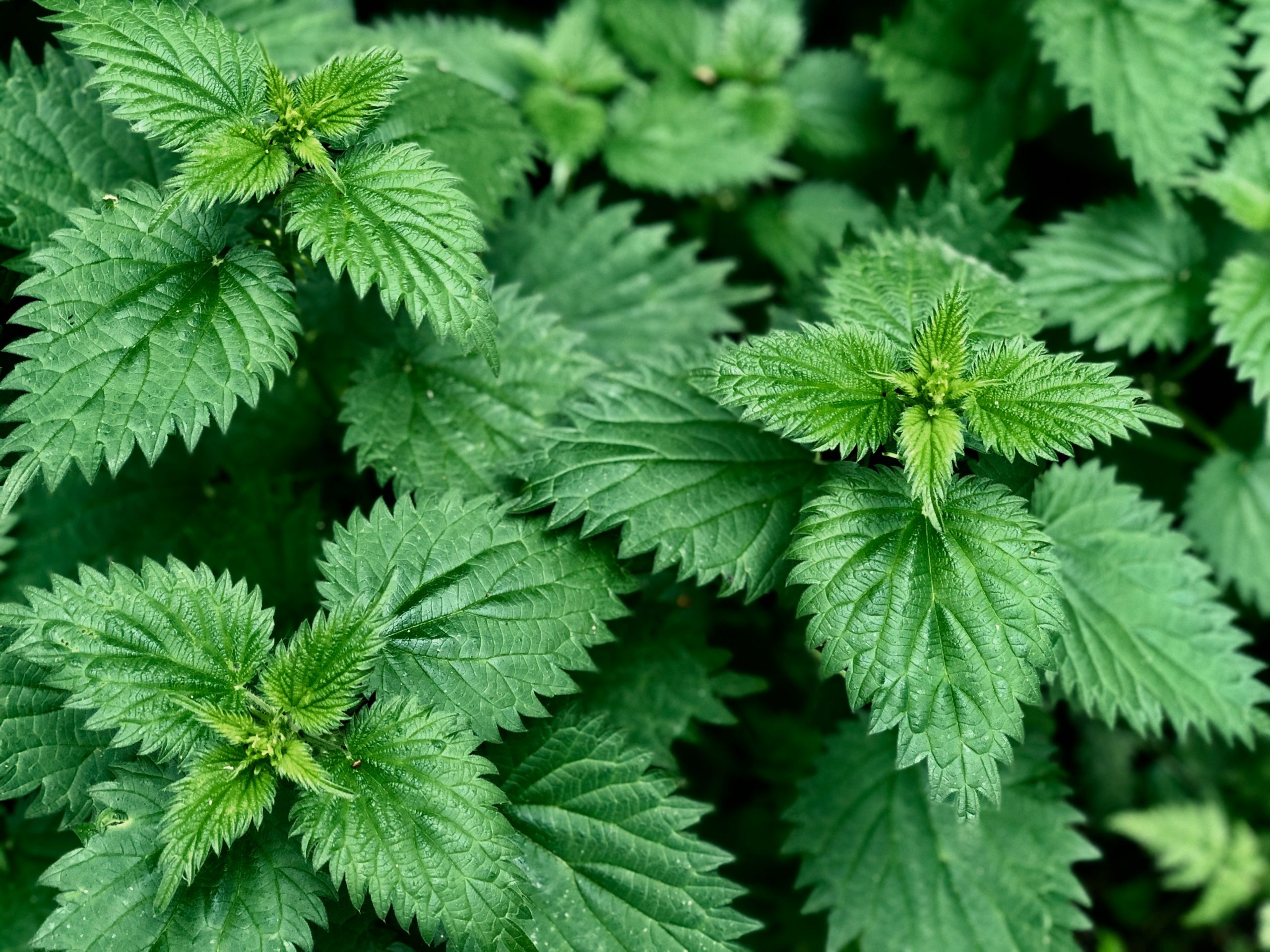
In France, what was regulated was not the cultivation of nettle, but the marketing of plant-based preparations. Any such product placed on the market must undergo an approval procedure before the competent authorities.
Facebook users have been sharing claims (1, 2) that France banned the targeted cultivation and processing of nettle in 2006 without government permission, and that disseminating knowledge about nettle through public appearances was also prohibited.
In posts circulating on social media, users state:
“Nettle could suffer the same fate as hemp. In 2006, France banned targeted cultivation and processing without government permission, and it also prohibited the dissemination of knowledge about nettle through public appearances. Since ancient Greece, it has been used for massage against rheumatism and as a remedy for anemia, bronchitis, migraines and all diseases resulting from bodily toxicity. Simple folk wisdom says — nettle cleans the blood. However, European Union law is relentless and has no place for folk wisdom. It went so far that France banned not only cultivation and processing, but also the dissemination of knowledge about nettle through public appearances. The rules were further tightened in 2006 with the adoption of the Agricultural Orientation Law (LOI 2006-11), which banned the sale of all plant-based preparations without special state approval. In the gardens of France, along with nettle, a rebellious spirit began to grow, and today one of the leaders of the rebellion is the chief gardener of the famous Versailles. Nettle has become a symbol of preserving folk medicine and organic production. French gardeners do not give up their ‘criminal’ practice, even though they face a fine of 75,000 euros and two years in prison…”
The posts further claim that “by joining the European Union, Croatia agreed to ban medicinal plants under European laws,” and list a series of allegedly “banned plants” in Croatia, including ivy, comfrey, hawthorn, St. John’s wort, oak, mistletoe, pansy, bearberry, walnut leaf, wormwood, coltsfoot, horsetail, celandine, senna, milk thistle and valerian.
Similar posts have been circulating on social media for years.
In Croatia, nettle cultivation is not banned. The regulation of other plants on the list – particularly regarding oral use – was previously addressed by Faktograf in 2022, as well as by the agricultural portal Agro Klub.
French Regulation
The false claim that France banned nettle production stems from a law adopted in January 2006, which introduced additional regulation of the sale of preparations intended for phytosanitary purposes. When this regulatory framework was adopted, it did not call into question the cultivation of nettle itself, but rather the production and marketing of plant-based preparations. Any such product intended for the market must undergo an approval procedure before the competent authorities.
In a joint statement, the French Ministry of Agriculture and the Ministry of the Economy clarified how the legal provisions should be interpreted.
Individuals, farmers and gardeners are not authorized to sell or distribute traditional natural products, such as nettle manure, without prior marketing authorization. This clarification refers to a provision of the Agricultural Orientation Law adopted in January 2006. Article 70 of that law prohibits “any commercial advertising and any recommendation” of phytopharmaceutical products that do not have marketing authorization. The procedure is intended to ensure that phytopharmaceutical products placed on the market are safe for users, consumers and the environment, and effective in combating plant diseases. The statement also noted that some natural products may indeed pose risks to users and/or consumers. It further clarified that “preparations made by individuals for personal use, such as nettle manure, are not subject to the provisions applicable to products placed on the market.” Consequently, promoting natural preparations among private individuals or sharing recipes for such preparations is not prohibited.
Nevertheless, the relatively restrictive legal framework governing plant preparations – referred to in France as “natural preparations of low concern” – has remained a contentious issue among French farmers.
Under pressure from criticism, the French Government approved one nettle fertilizer recipe in 2014, thereby permitting production according to that specific formulation. In May 2016, the independent ecology-focused outlet reporterre.net addressed the issue in an article titled “In the kingdom of absurdity, the war over nettle manure continues,” stating:
“Nettle manure, plant teas, sugar, vinegar, garlic… These natural recipes have been used for generations among French farmers and gardeners to protect crops. But since 2006 these 100 percent ecological preparations have been banned. They must first obtain marketing authorization, just like pesticides. It is a long and expensive evaluation process: submitting a dossier for the homologation of one recipe costs between 10,000 and 300,000 euros. The draft law on the future of agriculture, which is being debated today and tomorrow in the Senate, changes nothing — natural preparations of low concern (PNPP) remain subject to the same approval procedures as pesticides.”
Mobilization around natural preparations began in 2006 and gained wider public attention after inspectors visited landscape architect Éric Petiot in connection with his book Purin d’orties et Cie (“Nettle Manure and Co.”). Authorities sought to confiscate his computer for “disseminating knowledge about a non-approved product: nettle manure.” The 2006 agricultural law prohibits advertising and publishing recipes for non-approved phytopharmaceutical products, and the book in question contained such recipes.
Many agricultural collectives condemned what they perceived as the confiscation of knowledge. They interpreted it as a strategy by agro-industrial companies to patent traditional recipes and profit from them. The movement that emerged at the time – referred to as the “nettle war” – led to the introduction into law of the category “natural preparations of low concern” (PNPP), intended to facilitate the approval of natural preparations for use.
Ministry: Nettle Cultivation Is Permitted in France
Uncertainty surrounding the French law triggered a wave of disinformation claiming that nettle production had been banned in France. The portal Fake News Tragač published an article on the subject in February of last year. Its journalists contacted the French Ministry of Agriculture to inquire about the alleged ban. The Ministry responded:
“In France, nettle cultivation, the production of extracts and their sale for biostimulation and phytosanitary purposes are permitted.”
The article also included the Ministry’s clarification regarding phytosanitary preparations.
According to the French Ministry of Agriculture and Food, nettle fertilizer is “possible to prepare and use,” but in accordance with specifications defined by the Ministry. These specifications detail the regulatory requirements in two scenarios: when nettle fertilizer is produced for personal use and when it is produced for sale on the market. In both cases, a form contained in the annex to the specifications must be completed. The form intended for producers who plan to market the preparation includes several additional fields that must be filled in.
The Ministry further noted that a specific decree adopted in 2011 authorized the placing on the market of nettle fertilizer as a natural preparation of low concern for phytopharmaceutical use. This decree sets out more detailed rules regarding packaging and the safety instructions that must be displayed on the packaging, as reported by Fake News Tragač.
Therefore, it should once again be emphasized: no, the production and processing of nettle are not banned in France. This disinformation arose following the adoption of the 2006 law, which, among other things, regulated the placing of phytosanitary products on the market.