
Original article (in Montenegrin) was published on 02/04/2026; Author: Jovana Đurišić
Relations between Serbia and Croatia have deteriorated further in recent days after Croatian President Zoran Milanovic canceled the Brdo-Brijuni Summit, which Serbian President Aleksandar Vucic had also been expected to attend.
Milanovic’s decision followed Vucic’s statement after Serbia’s local elections on 29 March, in which he said he would “review reports from security agencies regarding possible foreign influence on the electoral process,” referring to “logistical support from a neighboring country” and alluding to Croatia. Claims by Serbian National Assembly Speaker Ana Brnabic about the presence of vehicles with Croatian license plates on election day also contributed to accusations by Serbian authorities of alleged Croatian interference.
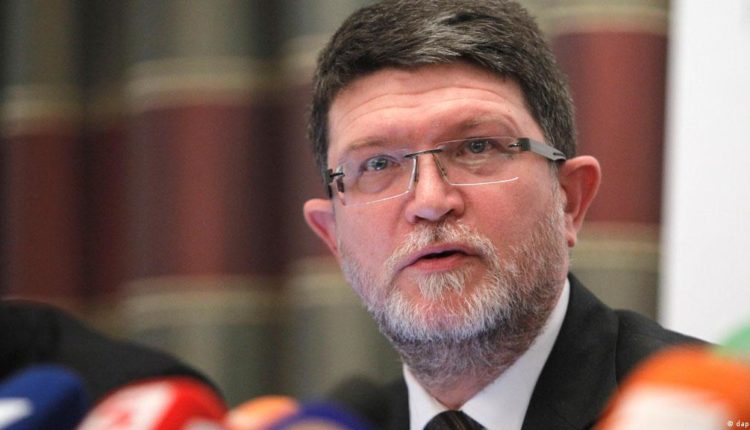
The situation and the state of relations between the two countries were commented on by Tonino Picula, the European Parliament’s rapporteur for Serbia. However, several media outlets close to the Serbian government adapted his remarks to fit their editorial narratives and took considerable liberties in interpreting what he actually said. https://ghostarchive.org/archive/29grr
The portals Borba (archived), Alo.rs (archived), Novosti (archived), Kurir (archived), and B92 (archived) published articles with headlines such as:
“Picula: Vucic Is Guilty Because He Pursues a Pro-Serbian Policy! (VIDEO)”
The articles attributed the following quote to Picula: (archived)
“At some point, Aleksandar Vucic must be told ‘enough.’ One must be consistent and clearly say no, not only to Aleksandar Vucic and his associates, but also to those in Serbia who practice pro-Russian and pro-Serbian policies, such as Serbian politicians from Montenegro. Simply put, we must send them strong messages.”
The articles included video footage of Picula’s statement, making it possible to verify whether he had actually criticized Vucic for pursuing a pro-Serbian policy within Serbia.
Asked about Milanovic’s decision, Picula said:
“I think the decision was expected. At some point Aleksandar Vucic really needs to be told ‘enough,’ and every possible effort should be made to limit his ability to manipulate and spread disinformation through his toxic statements, primarily to the public in Serbia, but also in the international context.”
When the journalist followed up by asking how relations should proceed, Picula responded:
“One must truly be consistent. When I say consistent, I mean clearly saying ‘no’ not only to Aleksandar Vucic and his associates, but also to those who genuinely practice pro-Russian and pro-Serbian policies – such as Milorad Dodik. His ability to operate politically should also be limited, particularly in Croatia.”
He continued:
“Likewise, the Croatian government should do more and adopt a firmer approach toward the regime in Belgrade. It is not enough to ban pro-Russian and pro-Serbian politicians from Montenegro from entering Croatia. The opportunities available to Aleksandar Vucic and the Serbian Progressive Party – which, incidentally, is a member of the European People’s Party – should also be restricted. Simply put, strong messages need to be sent.”
The video and Picula’s original remarks clearly show that he did not refer to pro-Serbian policies being practiced in Serbia. Rather, he was discussing Croatia’s response to political actors whom he described as pro-Russian and pro-Serbian, mentioning politicians from Montenegro in that same context.
The words “in Serbia” were added to Picula’s quote by the media outlets in question. He never uttered them. The addition appears to have been inserted to fit those outlets’ preferred narrative.
For this reason, the articles are rated as manipulation of facts.
The “Manipulation of Facts” rating is given to a media report that uses known and accurate facts but interprets them in a deceptive manner. These reports generally employ accurate information to draw incorrect conclusions or claims, leading media consumers to draw conclusions that differ from the actual meaning of the presented facts.
Edit: 6 April 2026
The portal Borba published a correction to its original article, clearly adhering to professional journalistic ethics and retracting the original claims. As a result, the article has been assigned the rating “Corrected”. This rating is given in cases where the media outlet establishes that the content it has published falls under one of the above-described negative ratings and then proceeds to correct it in a clear and visible way, per the principles of publishing corrections.
The portal Kurir also published a correction to its original article, clearly adhering to professional journalistic ethics and retracting the original claims. As a result, the article has been assigned the rating “Corrected”. This rating is given in cases where the media outlet establishes that the content it has published falls under one of the above-described negative ratings and then proceeds to correct it in a clear and visible way, per the principles of publishing corrections.
Edit: 16 April 2026
The portal Alo.rs published a correction to its original article, clearly adhering to professional journalistic ethics and retracting the original claims. As a result, the article has been assigned the rating “Corrected”. This rating is given in cases where the media outlet establishes that the content it has published falls under one of the above-described negative ratings and then proceeds to correct it in a clear and visible way, per the principles of publishing corrections.