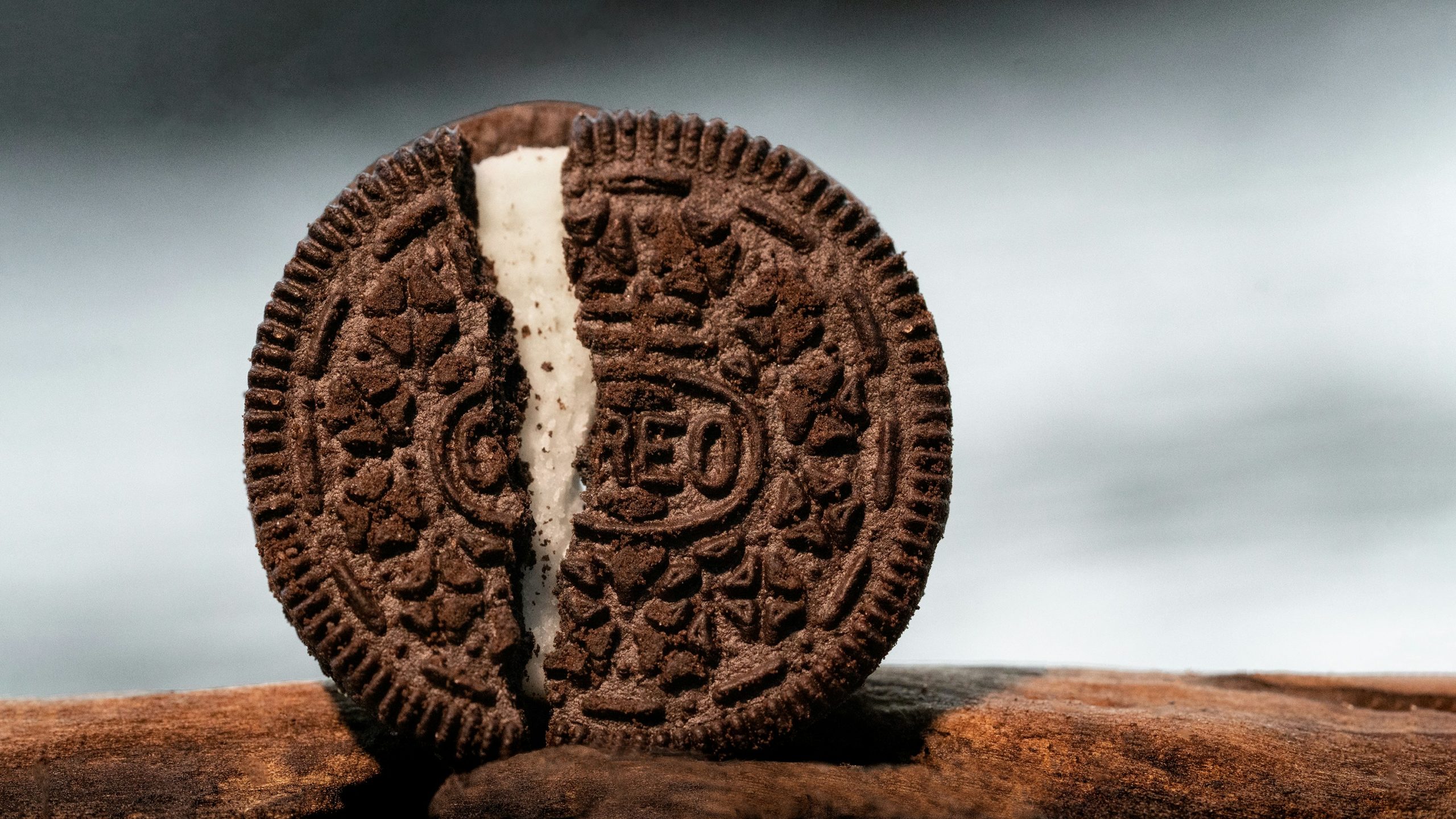
Original article (in Croatian) was published on 30/6/2025; Author: Anja Vladisavljević
Claims linking Oreo cookie designs to occult or secret societies are unfounded and not supported by the brand’s documented history.
As awareness about healthy eating grows, many consumers are giving up sugary snacks due to their health risks. However, some go further – searching for hidden meanings in food packaging and product designs. For them, logos, embossings, and decorative elements can carry symbolic weight far beyond marketing.
A recent Facebook post by a Croatian user claimed she threw away all her Oreo cookies, alleging they contain Masonic and Satanic symbolism.
“They’ve managed to poison everything – even our cookies. Oreo cookies are mocking us to our face with Masonic/Satanic symbolism. The black eye represents: Vril + adrenochrome. And also the Eye of Providence. I threw out all my Oreos and will never buy them again,” reads the post from June 26, 2025 (archived here).
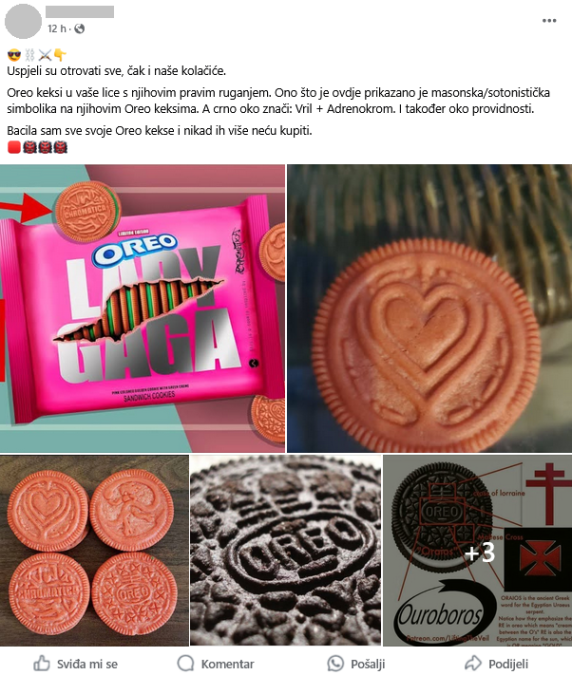
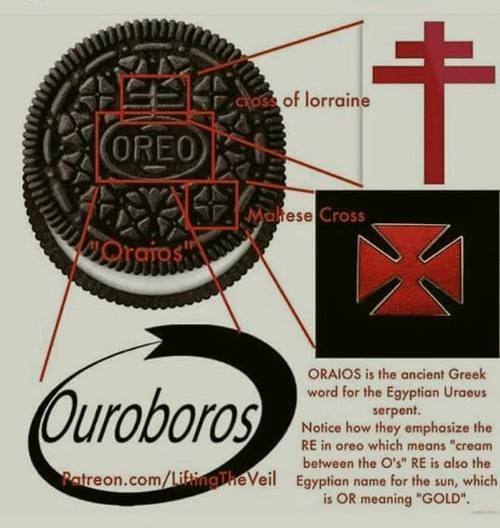
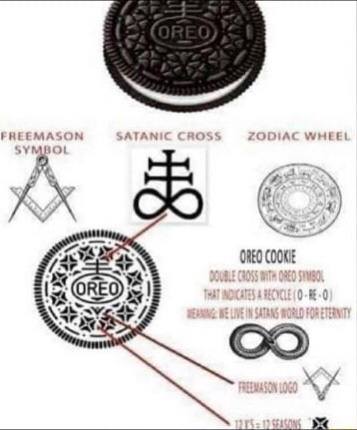
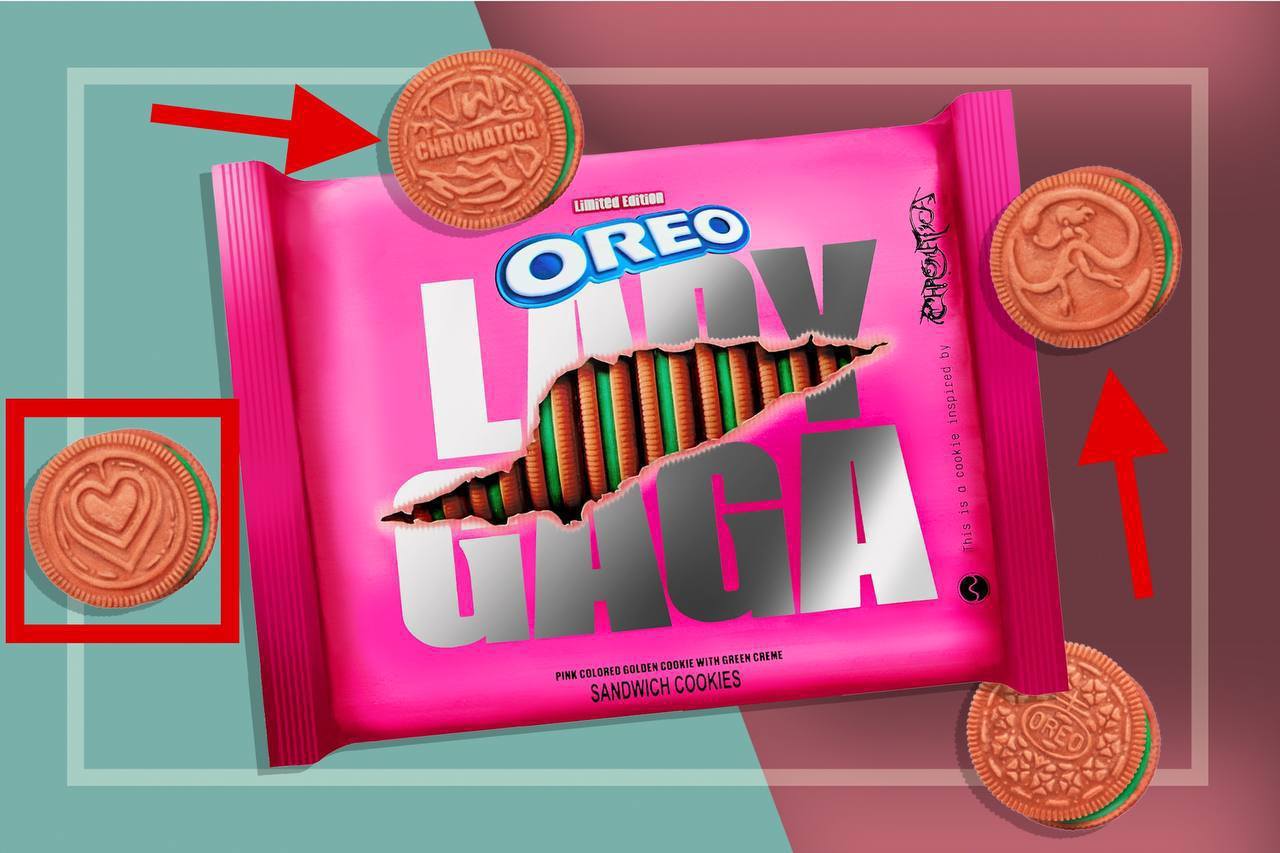
Accompanying the post were several photos of classic Oreo cookies (with the standard dark biscuit and white filling), as well as limited-edition versions featuring pink cookies and green filling, themed after pop star Lady Gaga.
Some of the images (1, 2, 3) include text purporting to explain the “hidden symbols” embossed on the cookies. These include references to the Lorraine cross, the Maltese cross, and ”Ouroboros” – a serpent-eating-its-tail symbol. The name “Oreo” is even claimed to derive from “Uraeus”, the Egyptian word for the sacred serpent.
In the case of the Lady Gaga-themed cookies, the post highlights hearts, the word “Chromatica,” and other abstract designs, interpreting them as occult or Satanic imagery.
A Case of Design, Not Mysticism
These interpretations are speculative and not supported by the documented history of the Oreo brand. The embossed designs on the cookies are more likely rooted in marketing and aesthetics, rather than any symbolic or esoteric meaning.
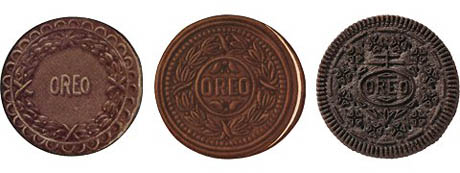
Oreo was introduced in 1912 by the National Biscuit Company (Nabisco). As The Atlantic explains – alongside original images – the first Oreo cookies featured a simple wreath border and the word “OREO” in plain lettering. A 1924 redesign added a laurel wreath with two doves and a bolder font. The current design was introduced in 1952, and has remained largely unchanged since.
Writing for Oreo’s 75th anniversary in 1986, Pulitzer-winning architecture critic Paul Goldberger noted that Oreo’s design is highly intentional:
“Oreo stands as an archetype of its kind – a reminder that cookies are designed as consciously as buildings, and sometimes better. Its even pattern – however cluttered – has an industrial, stamped-out quality. It combines domestic charm with America’s love for machine-like imagery. That’s where its design triumph lies.”
In a 2021 article, Logically Facts – a platform that debunks misinformation – reported that the modern Oreo design is widely attributed to William Turnier, a design engineer at Nabisco. His son, Bill Turnier, stated that his father had no interest in religious or mystical symbols, and that his choices were purely aesthetic.
However, Nabisco has never officially confirmed Turnier as the designer and has not released a definitive explanation for the cookie’s design.
Limited Editions Are Marketing, Not Messages
Oreo frequently releases limited editions for holidays like Christmas, Easter, and Halloween, as well as pop culture collaborations. Past editions have honored Mickey Mouse, Selena Gomez, and Lady Gaga.
The Lady Gaga-themed Oreo cookies were released in 2021, tied to her album “Chromatica”. Hence, the embossed word “Chromatica” on the cookie. Other visual elements, like abstract figures or alien-like shapes, mirror the album’s cover art – which features Gaga in a futuristic warrior pose.
The idea that these cookies contain occult symbols is a product of conspiracy theory thinking. People are, of course, free to avoid Oreos for dietary reasons – but not because they support “Satanism” or secret rituals.
In conclusion, viral claims that Oreo cookies contain occult or secret society symbols are unfounded. There is no evidence to support these interpretations, and the cookie designs appear to be driven by marketing and design trends, not hidden agendas.