
Journalism in the region is facing multiple challenges, from corrupt politicians who feel no accountability to the public, to problems with both the interpretation and enforcement of laws, and, most recently, severe funding shortages. Still, all across the region, journalists refuse to give up.
Anisa Mahmutović, a slight-framed young woman with fiery eyes from Sapna in northeastern Bosnia and Herzegovina’s Tuzla Canton, is among the few local journalists who dare to report on organized crime and corruption. She has faced threats, obstruction from local institutions, and even violence against a member of her family because of her work. As a freelancer, her status is precarious.
In January 2025, the sudden shutdown of the United States Agency for International Development (USAID) left many journalists — including Mahmutović — without promised payments for their work.
“I think the first cancellations happened around January 3, when USAID merely announced its departure. Even then, some organizations immediately began canceling collaborations and were left owing journalists money,” Mahmutović says, adding that no real effort was made to reach any kind of compromise.
The global consequences of USAID’s withdrawal have been profound. The advocacy website USAID Stop-Work reports that more than a quarter million positions across civil society and development sectors may have been eliminated worldwide. Although precise data for Southeast Europe is not available, the repercussions are clear.
Across the region, independent media outlets have halted projects, reduced staff, and frozen freelance contracts, leaving many journalists without stable income. All of this has the potential to profoundly undermine the quality of journalism in the region, particularly the kind of persistent, locally rooted reporting that holds power to account.
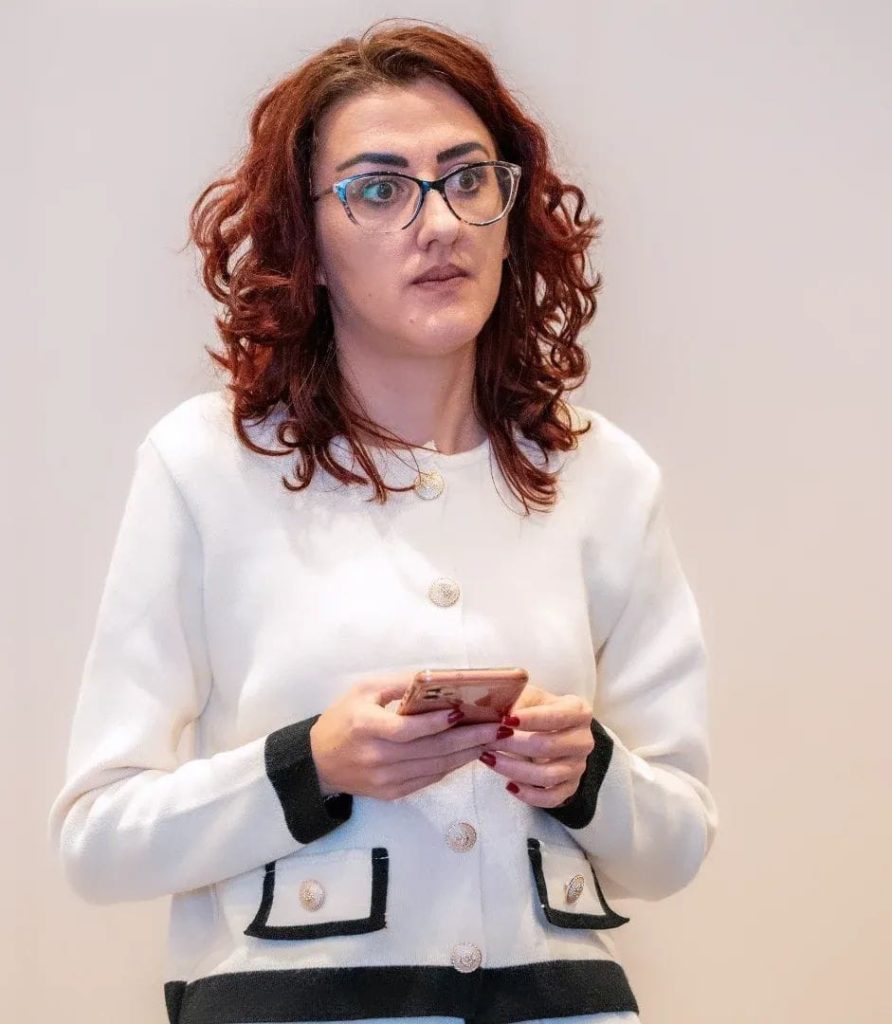
Photo: Anisa Mahmutović / Private archive
Anisa Mahmutović is one of the journalists whose work exemplifies this kind of journalism now under threat. She covers a wide range of local issues, from the existential challenges faced by returnees and the ecological consequences of unregulated industry to a potential conflict of interest involving State Minister Sevlid Hurtić, who is allegedly connected to the sale of textbooks printed by a company he owns to the public school system in the Tuzla Canton.
While sustained follow-up reporting is one of the nearly nonexistent features of Bosnian journalism, Mahmutović consistently stays with her stories. Her strong local focus allows her to develop an intimate understanding of the details and dynamics of each case, which is why she has been able to follow the developments in the Hurtić case.
Funding Shock and Local Media
Mahmutović was not alone in facing the sudden collapse of funding. Roughly two hours away, in Belgrade, Serbia, Bojan Cvejić was confronting the same uncertainty. At the time, he had just secured support for a new, Belgrade-based local media outlet as its editor and had invited four other people to join the team.
His first thought was the responsibility he felt toward them.
“I thought that all those people who had just started working, who had left their previous media jobs to join this new outlet that is still being built, would be left without work.”
There are few outlets in Serbia that consistently practice professional journalism, Cvejić says, and for those who want to do high-quality reporting, it is hard to find an appropriate outlet.
“It was an uncomfortable situation, because I had convinced these people to make the move and motivated them to start something new. So I tried first to find work for them, and only then to worry about myself,” he says.
Cvejić has since managed to secure a new position, but Belgrade still lacks a strong local outlet dedicated to reporting on local issues.
“There is still a missing space in the media market for a truly local outlet in Belgrade — one that would focus on informing residents, investigating, and covering topics of public interest for the people who live in and visit the city. National media mostly deal with national issues, but Belgrade has far more topics and problems than what appears on the national level. If you take just a few steps in Belgrade, you can find twenty different stories,” he says.
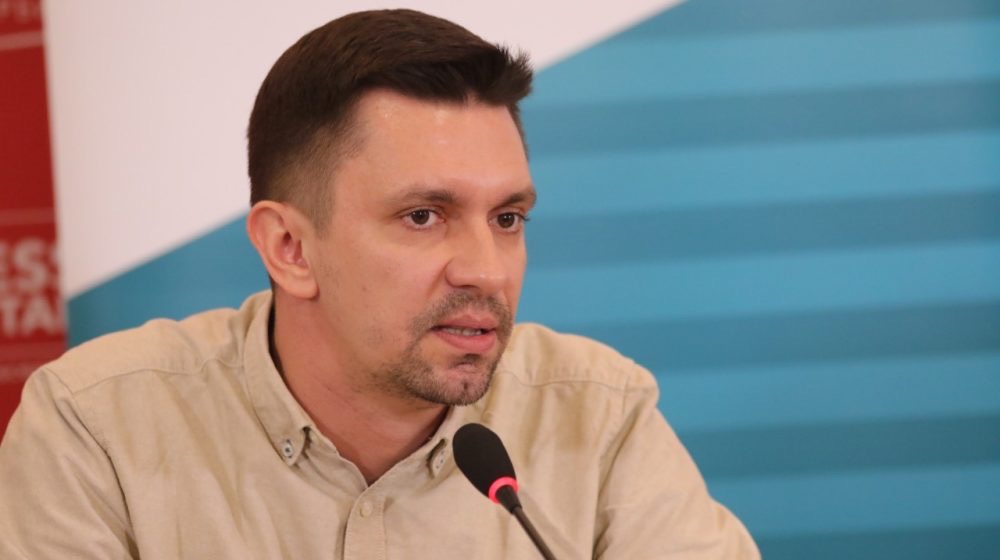
Photo: Bojan Cvejić / UNS Press Center
Journalism in Survival Mode
Predrag Rava from Serbia’s Journalists’ Association (UNS) says that in Serbia, the public interest is only partially fulfilled, and that the space for strengthening editorial independence and investing in investigative journalism has been weakened. His assessment mirrors the situation in Bosnia and Herzegovina, reflected in the working conditions faced by journalists such as Mahmutović.
At the most basic level, Rava points to precarious labor conditions as a key obstacle to quality journalism.
“Journalists in smaller local communities face the most difficult conditions. They are often engaged through service contracts or temporary agreements, which undermines their professional security. Salaries are below the national average, and often even below the median wage. Most journalists take on additional tasks without any increase in pay, work on multiple topics in parallel, and short deadlines have become the norm. Burnout and online threats are increasingly common. Working conditions are somewhat better at public service broadcasters,” he said.
Structural problems in the media market further deepen this crisis. Despite the large number of outlets in Serbia, Bojan Cvejić notes that many of them function as part of the government’s propaganda machine rather than as independent media.
The consequences of this environment are reflected in a sharp rise in threats against journalists. Tamara Filipović from the Independent Journalists’ Association of Serbia (NUNS) says the organization recorded 371 cases of threats to journalists’ safety in 2025, up from 168 in 2024, including 113 physical attacks and 165 threats.
“If these trends continue, journalism in Serbia will increasingly operate in a mode of ‘survival’ rather than development,” she said. “Instead of improving standards and developing new formats, we are dealing with basic issues — protecting journalists’ lives and safety. Pressures have expanded from physical attacks and threats to institutional disregard and increasingly sophisticated forms of pressure and surveillance.”
In such an environment, Filipović concludes, newsrooms turn to self-censorship, journalists leave the profession, and investigative reporting becomes a luxury.
A Regional Pattern of Decline
The situation is no better in other countries in the region. One of the most prominent negative developments was the closure of Al Jazeera Balkans, which affected multiple countries, including Bosnia and Herzegovina, where the largest newsroom in Sarajevo shut down and around 200 people lost their jobs.
In Croatia, independent media and newsroom jobs have also come under pressure: the digital station Radio Nacional was abruptly closed, leaving about a dozen journalists without work, while N1 Croatia cut around 26 positions in early 2025 as part of a restructuring process. At the same time, larger broadcasters, including the public service HRT, have announced significant staff reductions, reflecting broader challenges related to media freedom, financial sustainability, and editorial independence.
In North Macedonia, working conditions for journalists have significantly deteriorated, particularly in terms of workplace security, economic stability, and editorial independence, says Verce Kostovska from the Association of Journalists of Macedonia (AJM).
“The closure of media outlets, the downsizing of newsrooms, and the withdrawal or reduction of international donor support have resulted in a significant number of journalists losing their jobs, while many of those who remain employed are working under insecure, short-term contracts, often limited to only a few months,” she said.
The same trend is visible in Montenegro. Mila Radulović from the Association of Professional Journalists of Montenegro told SEE Check that wages comparable to those of manual laborers are discouraging for many journalists, resulting in fewer outlets and reporters committed to professional standards and more aligned with political or business interests. Many journalists, she added, take on multiple jobs simply to survive.
“Journalists are becoming cheap labor. For work carried out under constant public scrutiny, they are paid below the average,” Radulović said.
She argues that such conditions steadily erode the media’s public role. “If part of the authorities turn a blind eye to attacks on journalists they dislike, if journalists leave the profession because stressful and responsible work does not ensure a basic livelihood, and if editors and media directors flirt with political parties, the government, and business interests, then the media lose their very purpose,” Radulović concluded.
Working Without Pay
Anisa Mahmutović has experienced many of the obstacles that media experts identify as preventing journalists from doing their jobs. Even though her reporting has won prestigious awards and led to real systemic change — or perhaps precisely because of it — she faces threats from public officials and persistent difficulties in securing stable employment.
She recalled that a member of her family was physically attacked and suffered serious consequences around the time she was reporting on the wrongdoing of local politicians.
“In a way, the worst part is the feeling of guilt about the people around me, who suffer because of my work,” she said.
Still, she persists.
“When USAID left, independent media had no idea how they would continue to function,” she said, adding that although funding disappeared, her work did not. What suffered was her financial security — not her stories.
“I explained it to myself like this: the generation before us survived a war. They didn’t have salaries then either, but they still had to do their jobs. Now, we have to talk about corruption and crime even if we don’t have a salary. Not for a single moment did I think I should go and do something else. Not having a salary is difficult, but something will happen, something will change. Journalism cannot stop. It cannot disappear.”