
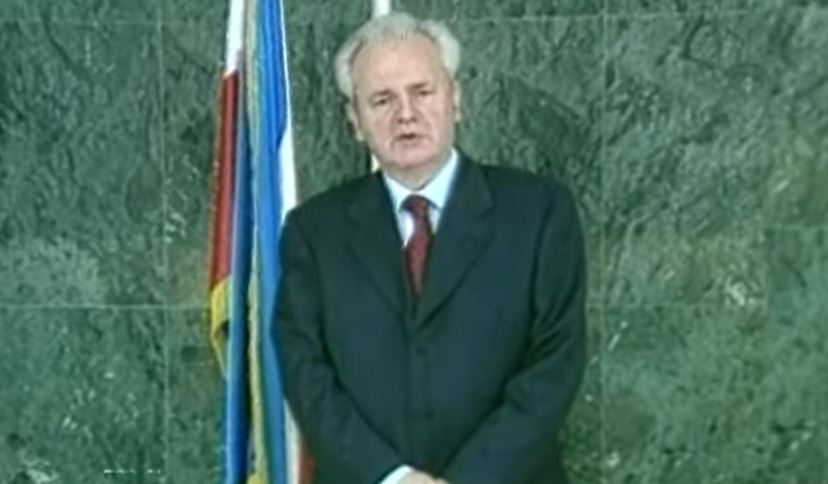
Original article (in Montenegrin) was published on 16/03/2026; Author: Marko Vukajlović
Two decades have passed since the death of former Federal Republic of Yugoslavia President Slobodan Milosevic. He died on 11 March 2006 in The Hague, where he was on trial for war crimes and crimes against humanity.
The anniversary of Milosevic’s death was marked in his hometown of Pozarevac. According to Serbian media, those paying tribute at his grave included convicted war criminal Vojislav Seselj and his son Aleksandar, former senior JUL official Milovan Bojic, Sinisa Vucinic, a member of the ruling Serbian Progressive Party’s main board, and representatives of the Socialist Party of Serbia. They described the former Hague detainee as a “symbol of resistance to global imperialism” and its first victim.
In a social media post on the topic, it was claimed that high school students from Danilovgrad had also paid tribute to Milosevic – young men and women who were not even born while he was alive. The post shared a memorial notice along with the message: (archived here)
Danilovgrad students pay tribute to Slobodan Milosevic
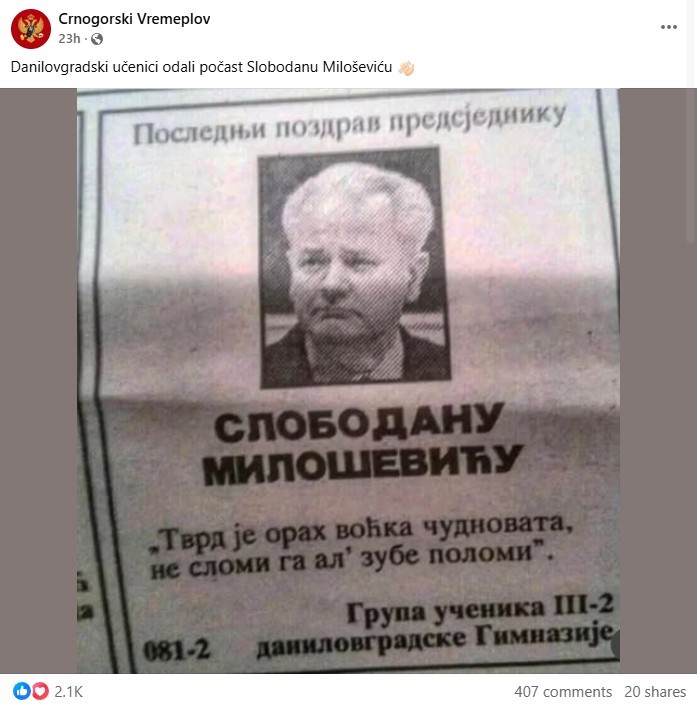
Within a short period, the post gathered more than 2,000 likes and over 400 comments, becoming viral. However, the photograph of the memorial notice is not recent. A search shows that it was already posted on Facebook in 2021, although that may not necessarily have been the original publication.
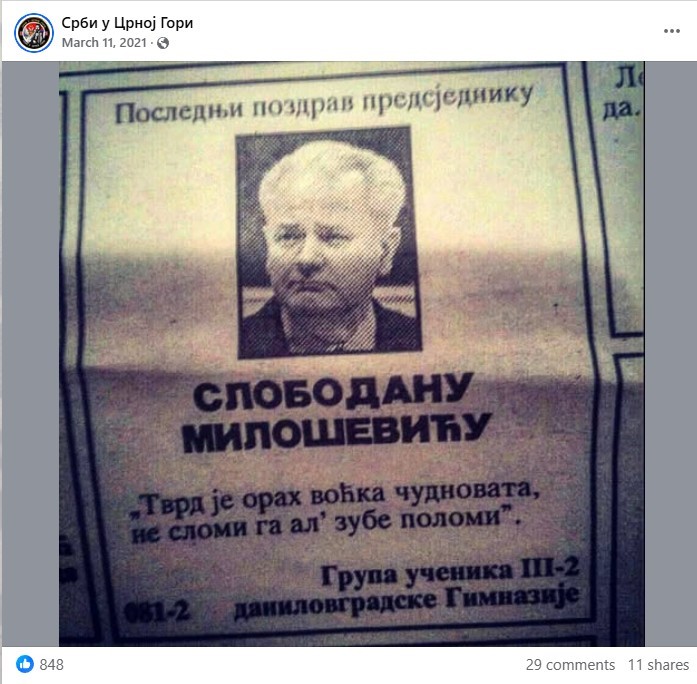
Although Milosevic continues to have significant support among some groups, and although he was indicted for war crimes in Kosovo and many other evils in Serbia and the Federal Republic of Yugoslavia and died before a verdict was reached, the available evidence clearly shows that the memorial notice being circulated is not current.
For that reason, the post is rated as “Manipulation of Facts.”
The “Manipulation of Facts” rating is given to a media report that uses known and accurate facts but interprets them in a deceptive manner. These reports generally employ accurate information to draw incorrect conclusions or claims, leading media consumers to draw conclusions that differ from the actual meaning of the presented facts.