
Original article (in Serbian) was published on 21/5/2026; Author: Stefan Kosanović
Earlier this week, several Serbian tabloids published articles claiming that Croatia was “appropriating the Serbian slava” after Croatia’s Ministry of Culture and Media added the custom of celebrating a family patron saint among Catholics in the Neretva region to the National register of cultural heritage. As evidence, the pro-government tabloids pointed to the fact that Serbia had already inscribed slava on UNESCO’s Representative List of the Intangible Cultural Heritage of Humanity in 2014, as well as to the fact that neither Serbia nor Serbs are mentioned in the Croatian document. However, UNESCO told Raskrikavanje that the inscription of a cultural practice on heritage lists “does not imply exclusivity or ownership of that heritage by a state.”
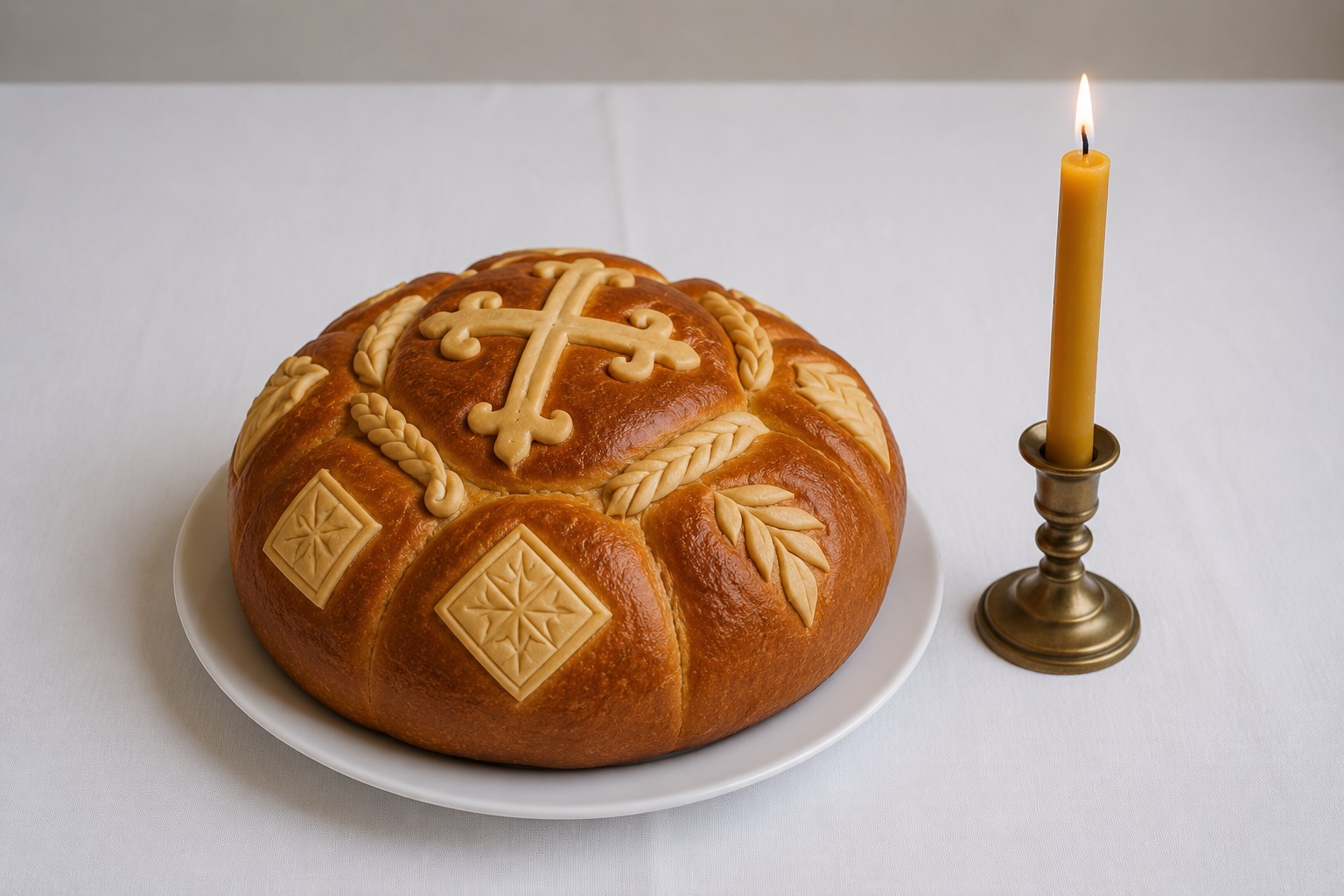
Several tabloids published articles earlier this week claiming that “Croats are officially appropriating the Serbian slava” and “stealing the Serbian national identity” after Croatia’s Ministry of Culture and Media added “Slava, krsnica, krsno ime, krsna slova – the celebration of a family patron saint among Catholics in the Neretva region” to the country’s national register of cultural heritage.
The tabloids portrayed the move as “the seizure of Serbian cultural heritage,” claiming that Croatia was ignoring the fact that Serbia had already inscribed slava on UNESCO’s Representative List of the Intangible Cultural Heritage of Humanity in 2014.
However, UNESCO protection and national cultural heritage registers do not function in the way the tabloids suggest.
In a response to Raskrikavanje, UNESCO said that the inscription of an element on its list “does not imply exclusivity or ownership of that heritage by a state.”
As UNESCO explained, the aim of the Convention for the Safeguarding of the Intangible Cultural Heritage is “to ensure visibility and encourage dialogue,” rather than to determine which country a particular tradition “belongs” to.
The convention was adopted in Paris in 2003, and both Serbia and Croatia — along with other countries in the region — are signatories to it.
The convention itself makes clear that every state has the right, and even the obligation, to identify and safeguard intangible cultural heritage present on its territory. This also means that similar or identical traditions may exist simultaneously in several countries.
“The convention also provides for the possibility of multinational nominations and the extension of already inscribed elements to additional states parties where communities share similar practices,” a UNESCO spokesperson told Raskrikavanje.
UNESCO further noted in its response that shared or similar cultural practices among different countries are not unusual when it comes to intangible cultural heritage.
One example of a multinational inscription on UNESCO’s Representative List of the Intangible Cultural Heritage of Humanity is “Arabic calligraphy: knowledge, skills and practices.” No fewer than 16 countries are listed as bearers of the element, including Saudi Arabia, Algeria, Bahrain, Egypt, Iraq, Jordan, Kuwait, Lebanon, Mauritania, Morocco, Oman, Palestine, Sudan, Tunisia, the United Arab Emirates and Yemen.
A geographically closer example is transhumance — the seasonal movement of people and livestock between summer and winter pastures. The element was inscribed on UNESCO’s list in 2023, with Albania, Andorra, Austria, Croatia, France, Greece, Italy, Luxembourg, Romania and Spain all listed as countries where the practice is recognized.
The tabloids also took issue with the fact that neither Serbia nor Serbs are mentioned in the Croatian document. However, there is no UNESCO rule or principle of international law requiring a country, when registering cultural heritage at the national level, to mention other states that have similar traditions or that previously nominated the same element before UNESCO.
The Croatian document itself does not claim that slava is an exclusively Croatian or Catholic custom. On the contrary, it states that the tradition exists “among Orthodox and partly Catholic populations in Southeastern Europe.”
In academic literature, slava is predominantly associated with the Serbian Orthodox tradition, and it was presented as such in Serbia’s UNESCO nomination. At the same time, ethnological research records similar customs among many Orthodox communities, including in North Macedonia and parts of Bulgaria, as well as among Catholic populations in certain areas of the Bay of Kotor, Herzegovina, the Neretva Valley and other parts of the Balkans, as a result of centuries of cultural intermingling in the region.
The issue was the main front-page story in yesterday’s edition of Serbian tabloid Srpski telegraf, while the same narrative was echoed by the portals Srbija Danas, Kurir and Republika.
What these reports had in common was that they all carried statements by Miodrag Linta, president of the Alliance of Serbs from the Region. His remarks also served as the basis for articles in a number of other outlets, including Tanjug, RTV, NS Uživo and many others.
Linta said Croatia was “continuing to appropriate Serbian cultural, spiritual and historical heritage,” arguing that the aim of such policies was the “Croatization of everything belonging to the Serbian people.”
At the same time, he proposed establishing a special state institution — a “Museum of Serbs from the Region” — dedicated to preserving the cultural heritage, customs and traditions of Serbs originating from neighboring countries.
The media largely carried Linta’s statements without additional context or verification of how UNESCO’s system for safeguarding intangible cultural heritage actually functions.
Serbian Inscriptions on the UNESCO List
Serbia has so far independently inscribed six elements on UNESCO’s Representative List of the Intangible Cultural Heritage of Humanity: “Naïve Painting of Kovačica,” “Social Practices and Knowledge Related to the Preparation and Use of Traditional Plum Brandy,” “Zlakusa Pottery,” “Singing to the Gusle,” “Kolo, Traditional Folk Dance,” and “Slava, Celebration of the Family Patron Saint.”
Two additional nominations from Serbia are currently underway: “Pirot Carpet Weaving, Knowledge and Skills” and “Transhumance, the Seasonal Movement of Livestock Between Pastures.” The latter is also the first nomination in which Serbia is participating jointly with several other countries.